
Sign In to Your Account
Subscribers have complete access to the archive.
Sign In Not a Subscriber?Join NowWooster Sauce
SPOTLIGHT
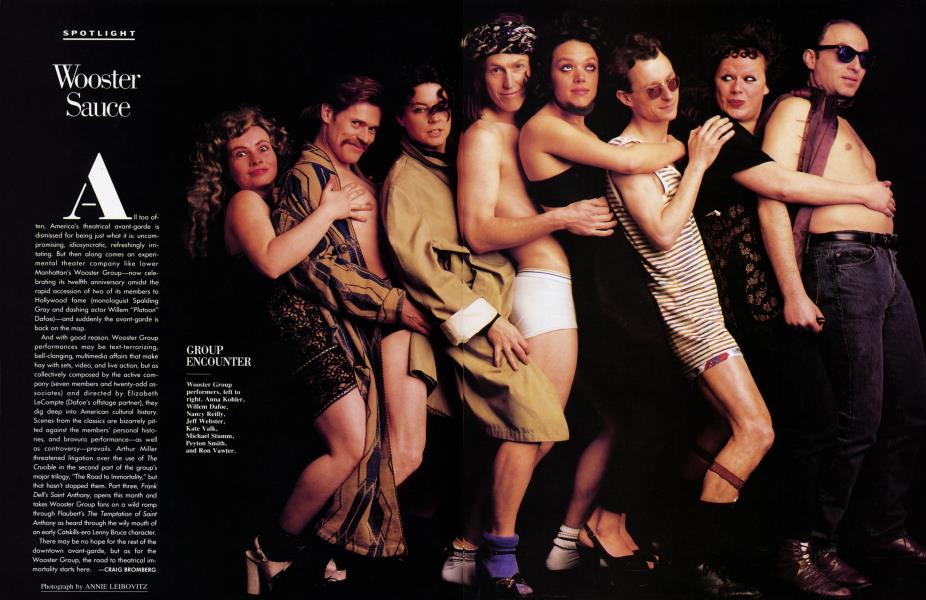
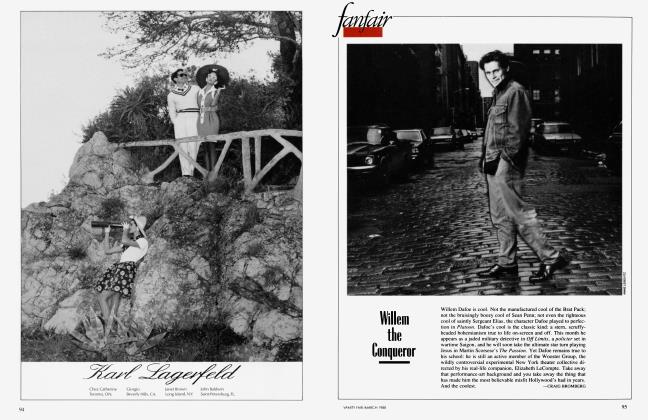
All too often, America's theatrical avant-garde is dismissed for being just what it is: uncompromising, idiosyncratic, refreshingly irritating. But then along comes an experimental theater company like lower Manhattan's Wooster Group—now celebrating its twelfth anniversary amidst the rapid accession of two of its members to Hollywood fame (monologuist Spalding Gray and dashing actor Willem "Platoon" Dafoe)—and suddenly the avant-garde is back on the map.
And with good reason. Wooster Group performances may be text-terrorizing, bell-clanging, multimedia affairs that make hay with sets, video, and live action, but as collectively composed by the active company (seven members and twenty-odd associates) and directed by Elizabeth LeCompte (Dafoe's offstage partner), they dig deep into American cultural history. Scenes from the classics are bizarrely pitted against the members' personal histories, and bravura performance—as well as controversy—prevails. Arthur Miller threatened litigation over the use of The Crucible in the second part of the group's major trilogy, 'The Road to Immortality," but that hasn't stopped them. Part three, Frank Dell's Saint Anthony, opens this month and takes Wooster Group fans on a wild romp through Flaubert's The Temptation of Saint Anthony as heard through the wily mouth of an early Catskills-era Lenny Bruce character.
There may be no hope for the rest of the downtown avant-garde, but as for the Wooster Group, the road to theatrical immortality starts here.
CRAIG BROMBERG
Subscribers have complete access to the archive.
Sign In Not a Subscriber?Join Now
