

Sign In to Your Account
Subscribers have complete access to the archive.
Sign In Not a Subscriber?Join NowEugene O'Neill
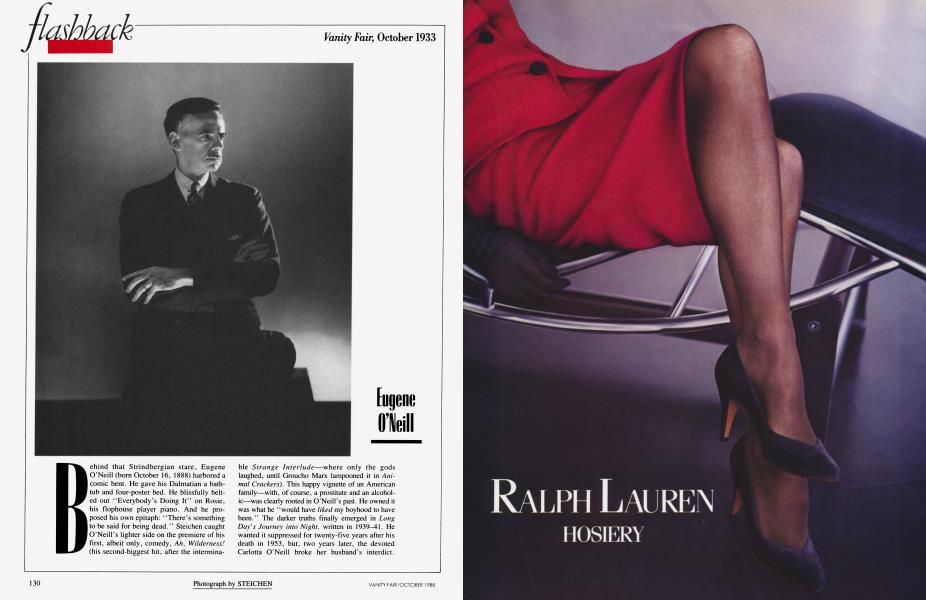
Behind that Strindbergian stare, Eugene O'Neill (bom October 16, 1888) harbored a comic bent. He gave his Dalmatian a bathtub and four-poster bed. He blissfully belted out "Everybody's Doing It" on Rosie, his flophouse player piano. And he proposed his own epitaph: "There's something to be said for being dead." Steichen caught O'Neill's lighter side on the premiere of his first, albeit only, comedy, Ah, Wilderness! (his second-biggest hit, after the interminable Strange Interlude—where only the gods laughed, until Groucho Marx lampooned it in Animal Crackers). This happy vignette of an American family—with, of course, a prostitute and an alcoholic—was clearly rooted in O'Neill's past. He owned it was what he "would have liked my boyhood to have been." The darker truths finally emerged in Long Day's Journey into Night, written in 1939-41. He wanted it suppressed for twenty-five years after his death in 1953, but, two years later, the devoted Carlotta O'Neill broke her husband's interdict.
Subscribers have complete access to the archive.
Sign In Not a Subscriber?Join Now