Sign In to Your Account
Subscribers have complete access to the archive.
Sign In Not a Subscriber?Join NowMaster Flash
KERTÉSZ'S ICONIC IMAGES CAPTURED THE MOMENT
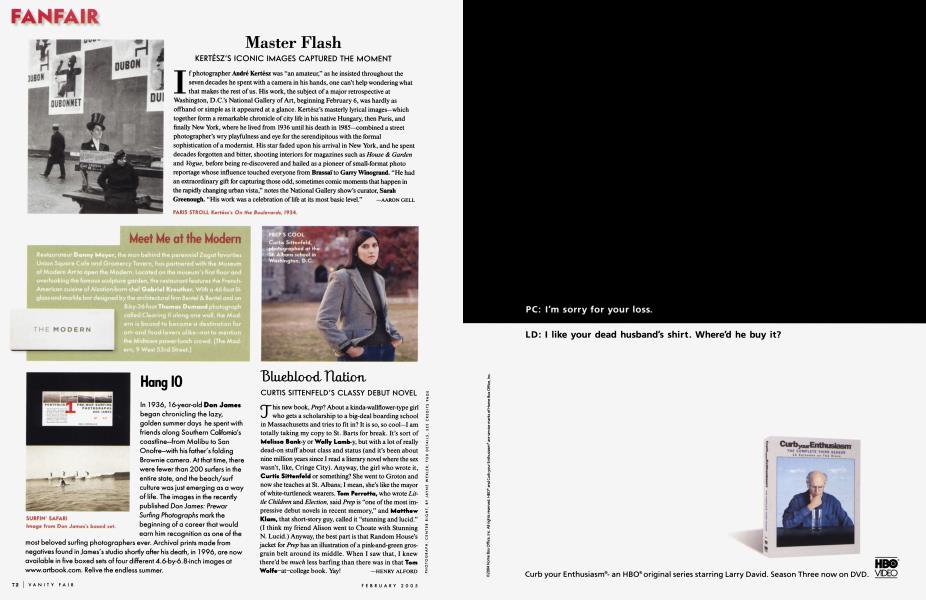
If photographer André Kertész was "an amateur," as he insisted throughout the seven decades he spent with a camera in his hands, one can't help wondering what that makes the rest of us. His work, the subject of a major retrospective at Washington, D.C.'s National Gallery of Art, beginning February 6, was hardly as offhand or simple as it appeared at a glance. Kertesz's masterly lyrical images—which together form a remarkable chronicle of city life in his native Hungary, then Paris, and finally New York, where he lived from 1936 until his death in 1985—combined a street photographer's wry playfulness and eye for the serendipitous with the formal sophistication of a modernist. His star faded upon his arrival in New York, and he spent decades forgotten and bitter, shooting interiors for magazines such as House & Garden and Vogue, before being re-discovered and hailed as a pioneer of small-format photo reportage whose influence touched everyone from Brassaï to Garry Winogrand. "He had an extraordinary gift for capturing those odd, sometimes comic moments that happen in the rapidly changing urban vista," notes the National Gallery show's curator, Sarah Greenough. "His work was a celebration of life at its most basic level." AARON GELL

Subscribers have complete access to the archive.
Sign In Not a Subscriber?Join Now