
Sign In to Your Account
Subscribers have complete access to the archive.
Sign In Not a Subscriber?Join NowTHE RED HERRING
Spotlight
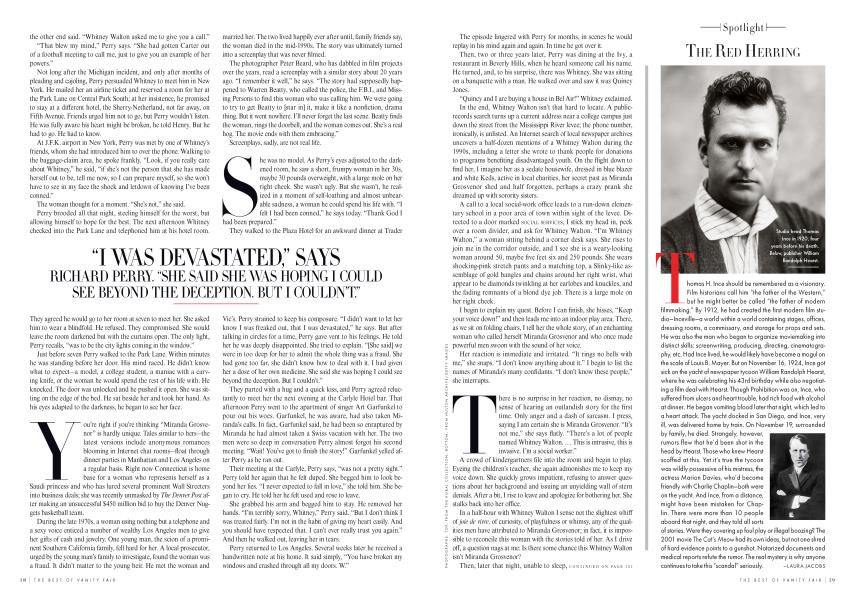
Thomas H. Ince should be remembered as a visionary. Film historians call him "the father of the Western," but he might better be called "the father of modern filmmaking." By 1912, he had created the first modern film studio-lnceville-a world within a world containing stages, offices, dressing rooms, a commissary, and storage for props and sets. He was also the man who began to organize moviemaking into distinct skills: screenwriting, producing, directing, cinematography, etc. Had Ince lived, he would likely have become a mogul on the scale of Louis B. Mayer. But on November 16, 1924, Ince got sick on the yacht of newspaper tycoon William Randolph Hearst, where he was celebrating his 43rd birthday while also negotiating a film deal with Hearst. Though Prohibition was on, Ince, who suffered from ulcers and heart trouble, had rich food with alcohol at dinner. He began vomiting blood later that night, which led to a heart attack. The yacht docked in San Diego, and Ince, very ill, was delivered home by train. On November 19, surrounded
by family, he died. Strangely, however, rumors flew that he'd been shot in the head by Hearst. Those who knew Hearst scoffed at this. Yet it's true the tycoon was wildly possessive of his mistress, the actress Marion Davies, who'd become friendly with Charlie Chaplin-both were on the yacht. And Ince, from a distance, might have been mistaken for Chaplin. There were more than 10 people aboard that night, and they told all sorts
of stories. Were they covering up foul play or illegal boozing? The 2001 movie The Cat's Meow had its own ideas, but not one shred of hard evidence points to a gunshot. Notarized documents and medical reports refute the rumor. The real mystery is why anyone continues to take this "scandal" seriously.
LAURA JACOBS
Subscribers have complete access to the archive.
Sign In Not a Subscriber?Join Now