
Sign In to Your Account
Subscribers have complete access to the archive.
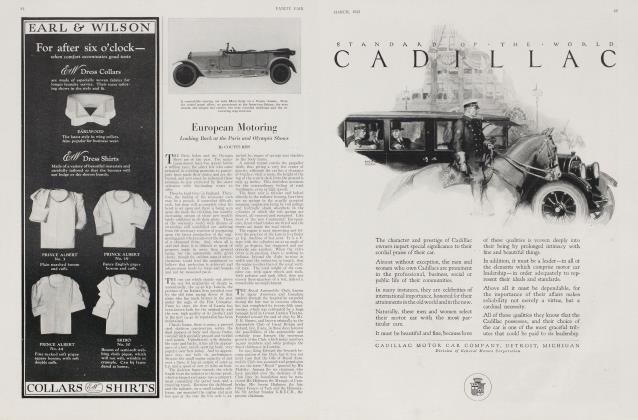
Sign In Not a Subscriber?Join NowEuropean Motoring
Designers Must Produce More Cars by Better Spring Suspension
COUTTS BISS
FOR the past twenty years, so much attention has been concentrated by designers and manufacturers on the internal combustion engine that little progress has been made in chassis design, with the exception of a few improvements in really trivial details. The progress of the internal combustion engine has been so rapid that several car manufacturers have deliberately cut down the engine power in order that the car shall not be driven at a higher speed than that for which the rest of the chassis is designed.
The car of today is fast, powerful and reliable, but it lacks comfort. Designers must concentrate on that object because that is what the European motoring public is demanding in a voice of increasing volume. The most outstanding instance of stagnation in the progress of chassis design is the leaf type spring, which is a relic of the horse drawn carriage and is capable of great improvement. It is clear that a nonadjustable leaf spring cannot deal satisfactorily with the varying conditions which a car has to encounter, and yet, if the suspension is too flexible, there is the danger of too much roll or sidesway on comers.
Again, many manufacturers are in favor of larger wheels and there is no doubt that larger wheels spell comfort, as they are not so greatly affected by potholes as are small ones. The whole question of suspension and riding qualities has become one of vital importance and the time has come for manufacturers to direct all their energies and facilities toward the better springing of their cars.
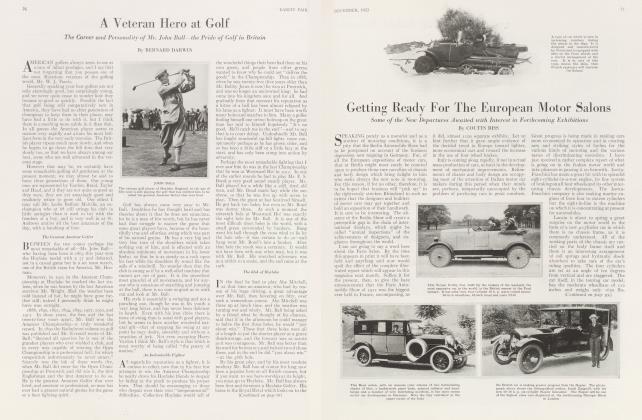
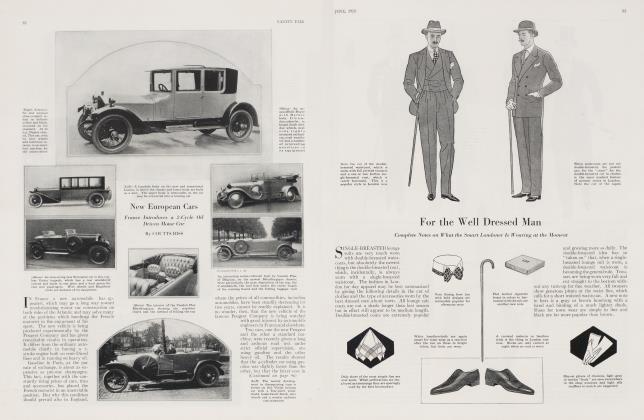
Two or three issues ago there was shown in this magazine a full page having to do with the Rumpler car. Although criticisms of the appearance of this German machine have been numerous, nothing has been said against its operation. The Rumpler principle of putting the engine behind has a great deal to recommend it, as it brings the power unit into closer proximity with the work it has to perform. The ea and comfort of the passengers is certainly increased as all are well within the wheel base and any noise or heat being carried out from the rear, is no so noticeable in the car. The drive in a single seat right up in the "nose" has nothing to interfere with his vie and there is a greater length of chass available for the development features of comfort and convenience fo passengers. If the public ever become keen on a chassis of this design, shall see a revolutionary change in the present type of coachwork. The coach builder will have much greater scope for his abilities. This car, in its various types, is being watched over carefully here. If it "takes on" and proves satisfactory, you may be sure that other like it will appear and that its presend peculiar appearance will be considered the regular thing in the future.
This year there has been a very noticeable change in fashionable Europear coachwork. The tendency now is a toward severe lines and fewer curved panels. In fact, everything square out seems to be preferred. After the wa while the boom was on and money was plentiful, coachbuilders were overwhelmed with orders fcr expensive and often extravagantly florid bodies. Matters are now settling down, however, and the tendency is toward more dignifled and quieter coachwork.
It is practically certain that the fourdoor all-weather convertible body gradually usurp the place of all other types of covered cars. I understand that this is just the reverse of the case in the United States and that you have no use whatever over there for convertible cars. Indisputible evidence, however, of the growing popularity of this type in Europe lies in the figures which manufacturers give of the numbers of all-weather cars sold in compahson with the numbers of other types. This body style is sure to be prominent feature of all the Europea automobile expositions this year.
Subscribers have complete access to the archive.
Sign In Not a Subscriber?Join Now