


Sign In to Your Account
Subscribers have complete access to the archive.
Sign In Not a Subscriber?Join NowTravel Tome
For Granta, Gellhorn goes back to Havana
READING
Cocteau's abiding love-hate thing for Proust dominates these jottings.
ELLIOTT STEIN
Glranta, published in England and distributed here by Penguin, is one of the best literary magazines on either side of the Atlantic. The paperbackformat quarterly is iconoclastic, intensely literary, intensely political, sometimes infuriating, and always good to read. The special "theme" issues have been particularly good (one, on American fiction, was called "Dirty Realism"; the sequel, inevitably, was "More Dirt"), and the current issue on travel writing is, even by Granta's own high standards, one of the best to date.
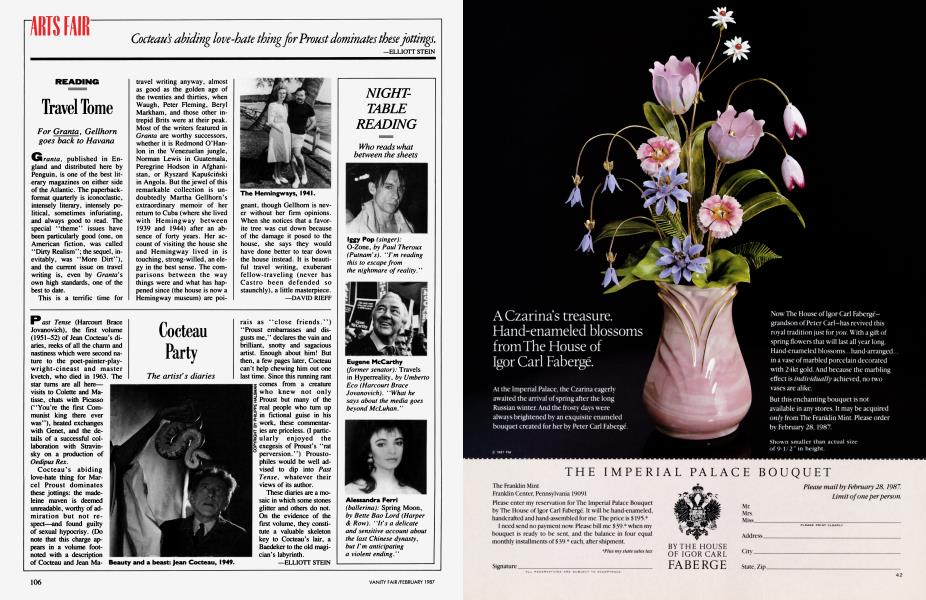
This is a terrific time for travel writing anyway, almost as good as the golden age of the twenties and thirties, when Waugh, Peter Fleming, Beryl Markham, and those other intrepid Brits were at their peak. Most of the writers featured in Granta are worthy successors, whether it is Redmond O'Hanlon in the Venezuelan jungle, Norman Lewis in Guatemala, Peregrine Hodson in Afghanistan, or Ryszard Kapuscinski in Angola. But the jewel of this remarkable collection is undoubtedly Martha Gellhorn's extraordinary memoir of her return to Cuba (where she lived with Hemingway between 1939 and 1944) after an absence of forty years. Her account of visiting the house she and Hemingway lived in is touching, strong-willed, an elegy in the best sense. The comparisons between the way things were and what has happened since (the house is now a Hemingway museum) are poi-
gnant, though Gellhorn is never without her firm opinions. When she notices that a favorite tree was cut down because of the damage it posed to the house, she says they would have done better to tear down the house instead. It is beautiful travel writing, exuberant fellow-traveling (never has Castro been defended so staunchly), a little masterpiece.
DAVID RIEFF
Subscribers have complete access to the archive.
Sign In Not a Subscriber?Join Now