
Sign In to Your Account
Subscribers have complete access to the archive.
Sign In Not a Subscriber?Join NowEditor's Letter
The Spoils of War
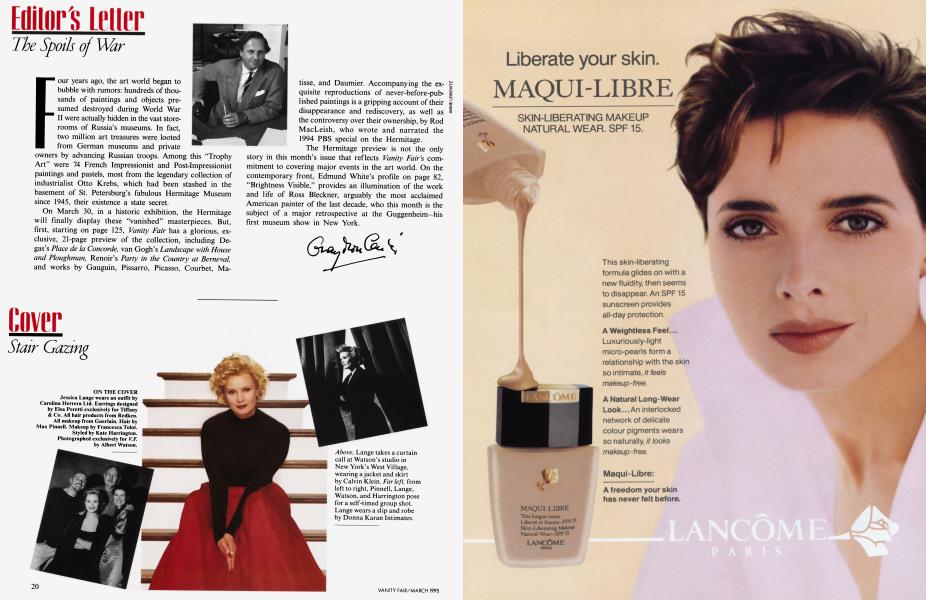
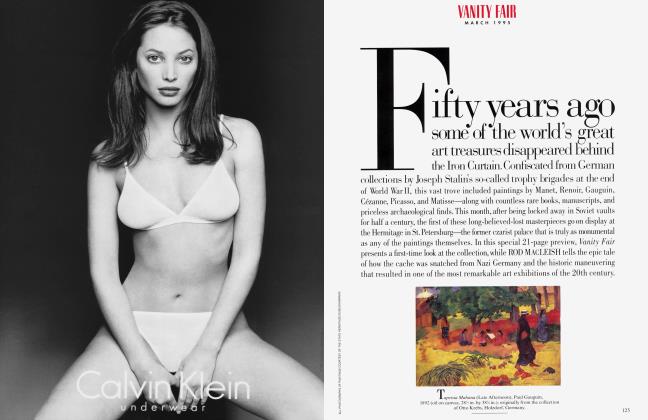
Four years ago, the art world began to bubble with rumors: hundreds of thousands of paintings and objects presumed destroyed during World War II were actually hidden in the vast storerooms of Russia's museums. In fact, two million art treasures were looted from German museums and private owners by advancing Russian troops. Among this "Trophy Art" were 74 French Impressionist and Post-Impressionist paintings and pastels, most from the legendary collection of industrialist Otto Krebs, which had been stashed in the basement of St. Petersburg's fabulous Hermitage Museum since 1945, their existence a state secret.
On March 30, in a historic exhibition, the Hermitage will finally display these "vanished" masterpieces. But, first, starting on page 125, Vanity Fair has a glorious, exclusive, 21-page preview of the collection, including Degas's Place de la Concorde, van Gogh's Landscape with House and Ploughman, Renoir's Party in the Country at Berneval, and works by Gauguin, Pissarro, Picasso, Courbet, Matisse, and Daumier. Accompanying the exquisite reproductions of never-before-pubfished paintings is a gripping account of their disappearance and rediscovery, as well as the controversy over their ownership, by Rod MacLeish, who wrote and narrated the 1994 PBS special on the Hermitage.
The Hermitage preview is not the only story in this month's issue that reflects Vanity Fair's commitment to covering major events in the art world. On the contemporary front, Edmund White's profile on page 82, "Brightness Visible," provides an illumination of the work and fife of Ross Bleckner, arguably the most acclaimed American painter of the last decade, who this month is the subject of a major retrospective at the Guggenheim—his first museum show in New York.
Subscribers have complete access to the archive.
Sign In Not a Subscriber?Join Now