



Sign In to Your Account
Subscribers have complete access to the archive.
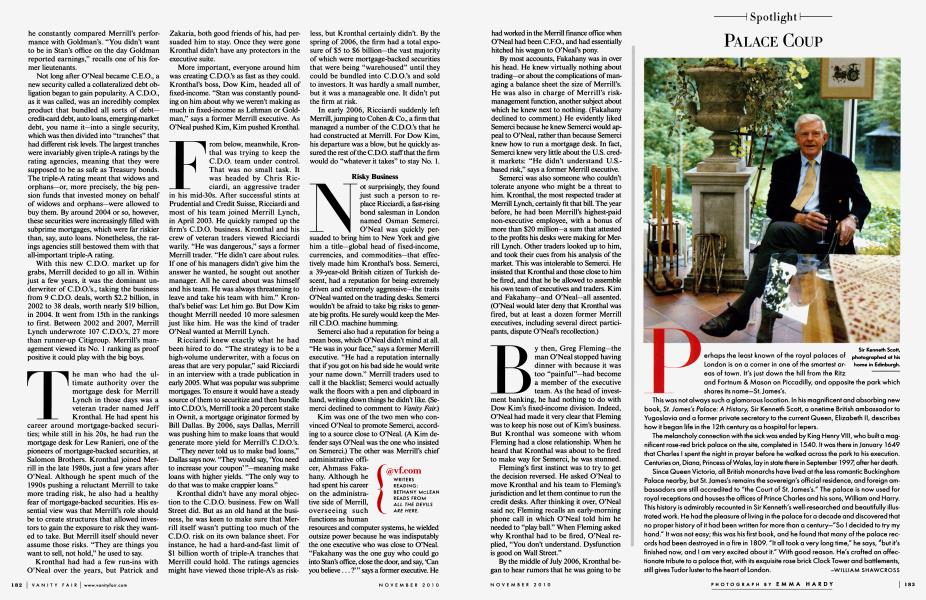
Sign In Not a Subscriber?Join NowPerhaps the least known of the royal palaces of London is on a corner in one of the smartest areas of town. It's just down the hill from the Ritz and Fortnum & Mason on Piccadilly, and opposite the park which shares its name—St. James's.
This was not always such a glamorous location. In his magnificent and absorbing new book, St. James's Palace: A History, Sir Kenneth Scott, a onetime British ambassador to Yugoslavia and a former private secretary to the current Queen, Elizabeth II, describes how it began life in the 12th century as a hospital for lepers.
The melancholy connection with the sick was ended by King Henry VIII, who built a magnificent rose-red brick palace on the site, completed in 1540. It was there in January 1649 that Charles I spent the night in prayer before he walked across the park to his execution. Centuries on, Diana, Princess of Wales, lay in state there in September 1997, after her death.
Since Queen Victoria, all British monarchs have lived at the less romantic Buckingham Palace nearby, but St. James's remains the sovereign's official residence, and foreign ambassadors are still accredited to "the Court of St. James's." The palace is now used for royal receptions and houses the offices of Prince Charles and his sons, William and Harry. This history is admirably recounted in Sir Kenneth's well-researched and beautifully illustrated work. He had the pleasure of living in the palace for a decade and discovered that no proper history of it had been written for more than a century—"So I decided to try my hand." It was not easy; this was his first book, and he found that many of the palace records had been destroyed in a fire in 1809. "It all took a very long time," he says, ,;but it's finished now, and I am very excited about it." With good reason. He's crafted an affectionate tribute to a palace that, with its exquisite rose brick Clock Tower and battlements, still gives Tudor luster to the heart of London.





Subscribers have complete access to the archive.
Sign In Not a Subscriber?Join Now