Sign In to Your Account
Subscribers have complete access to the archive.
Sign In Not a Subscriber?Join NowThe New American Currency
A Few Designs Which the Treasury Department Might Consider for Its New Small Size Bills
RALPH BARTON
A POPULAR belief is that business is transacted nowadays, not in gold dust, or wampum, but in "paper money." Curiously enough this is true. The announcement should therefore be of general interest that the United States Treasury, for reasons of convenience, art and economy, will next year introduce paper money smaller by one-third than the bills now in circulation. This is the most radical change in the physical aspect of our currency since the era popularly known as "Early Years of the Republic."
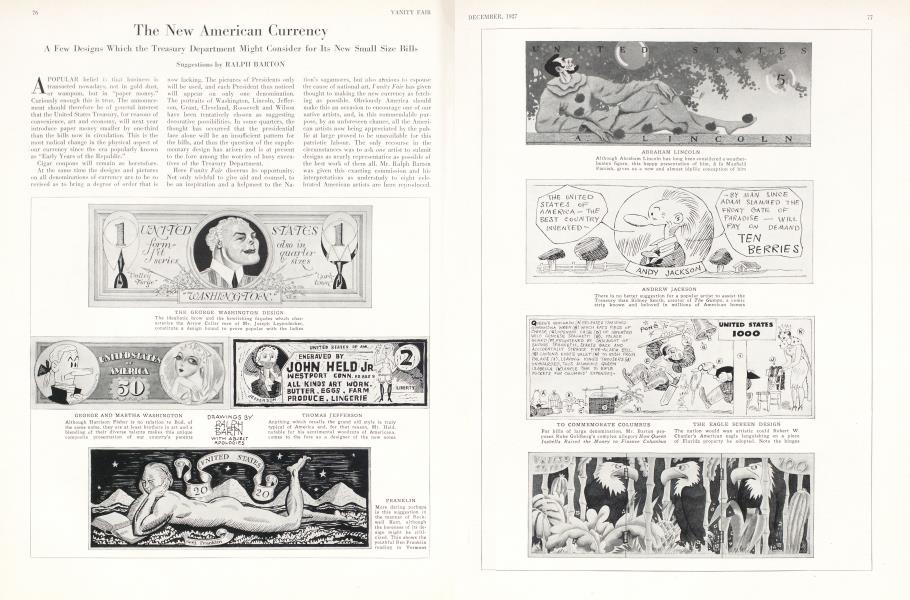
Cigar coupons will remain as heretofore. At the same time the designs and pictures on all denominations of currency are to be so revised as to bring a degree of order that is now lacking. The pictures of Presidents only will be used, and each President thus noticed will appear on only one denomination. The portraits of Washington, Lincoln, Jefferson, Grant, Cleveland, Roosevelt and Wilson have been tentatively chosen as suggesting decorative possibilities. In some quarters, the thought has occurred that the presidential face alone will be an insufficient pattern for the bills, and thus the question of the supplementary design has arisen and is at present to the fore among the worries of busy executives of the Treasury Department.
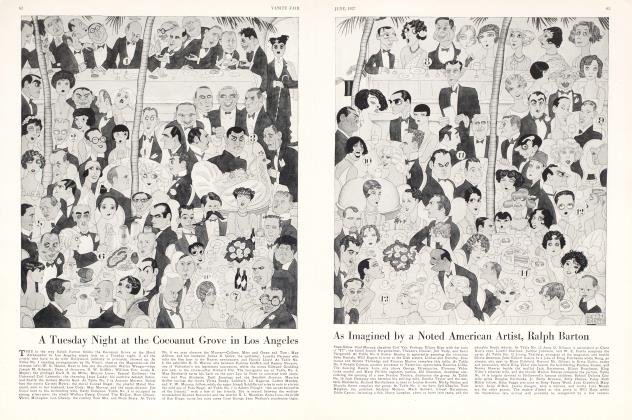
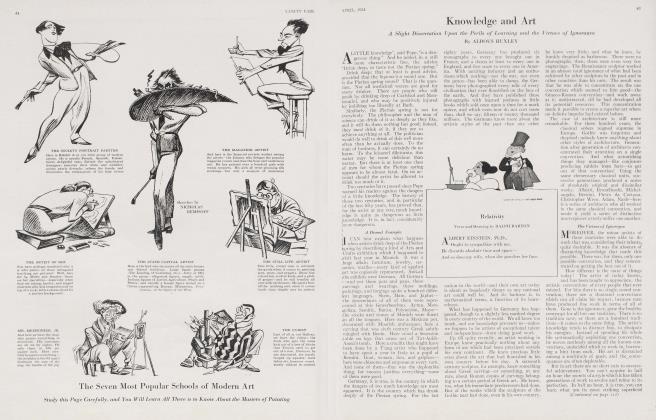
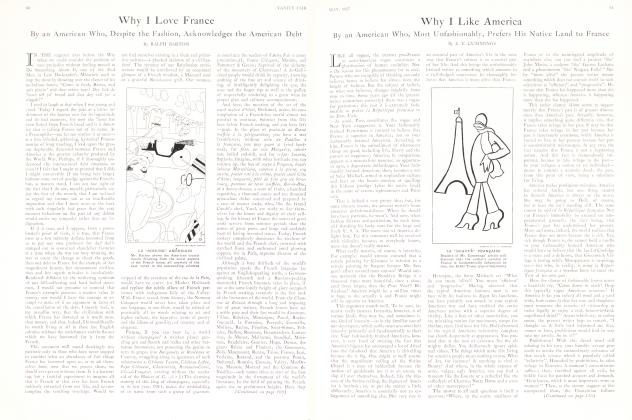
Here Vanity Fair discerns its opportunity. Not only wishful to give aid and counsel, to be an inspiration and a helpmeet to the Nation's sagamores, but also ahxious to espouse the cause of national art, Vanity Fair has given thought to making the new currency as fetching as possible. Obviously America should make this an occasion to encourage one of our native artists, and, in this commendable purpose, by an unforeseen chance, all the American artists now being appreciated by the public at large proved to be unavailable for this patriotic labour. The only recourse in the circumstances was to ask one artist to submit designs as nearly representative as possible of the best work of them all. Mr. Ralph Barton was given this exacting commission and his interpretations as understudy to eight celebrated American artists are here reproduced.
Subscribers have complete access to the archive.
Sign In Not a Subscriber?Join Now
