





Sign In to Your Account
Subscribers have complete access to the archive.
Sign In Not a Subscriber?Join NowWilly World
BEHIND THE SCENES OF A CHILDHOOD CLASSIC
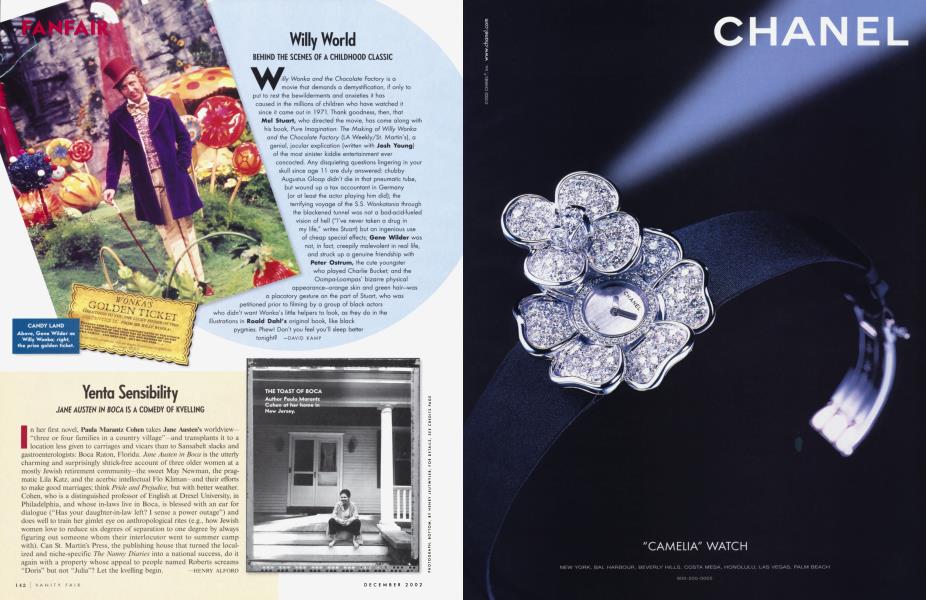
Willy Wonka and the Chocolate Factory is a movie that demands a demystification, if only to put to rest the bewilderments and anxieties it has caused in the millions of children who have watched it since it came out in 1971. Thank goodness, then, that Mel Stuart, who directed the movie, has come along with his book, Pure Imagination: The Making of Willy Wonka and the Chocolate Factory (LA Weekly/St. Martin's), a genial, jocular explication (written with Josh Young) of the most sinister kiddie entertainment ever concocted. Any disquieting questions lingering in your skull since age 11 are duly answered: chubby Augustus Gloop didn't die in that pneumatic tube, but wound up a tax accountant in Germany (or at least the actor playing him did); the terrifying voyage of the S.S. Wonkatania through the blackened tunnel was not a bad-acid-fueled vision of hell ("I've never taken a drug in my life," writes Stuart) but an ingenious use ! of cheap special effects; Gene Wilder was not, in fact, creepily malevolent in real life, and struck up a genuine friendship with Peter Ostrum, the cute youngster who played Charlie Bucket; and the Oompa-Loompas' bizarre physical appearance—orange skin and green hair—was a placatory gesture on the part of Stuart, who was petitioned prior to filming by a group of black actors who didn't want Wonka's little helpers to look, as they do in the illustrations in Roald Dahl's original book, like black pygmies. Phew! Don't you feel you'll sleep better tonight?
DAVID KAMP
Subscribers have complete access to the archive.
Sign In Not a Subscriber?Join Now