Sign In to Your Account
Subscribers have complete access to the archive.
Sign In Not a Subscriber?Join NowEDITOR'S LETTER
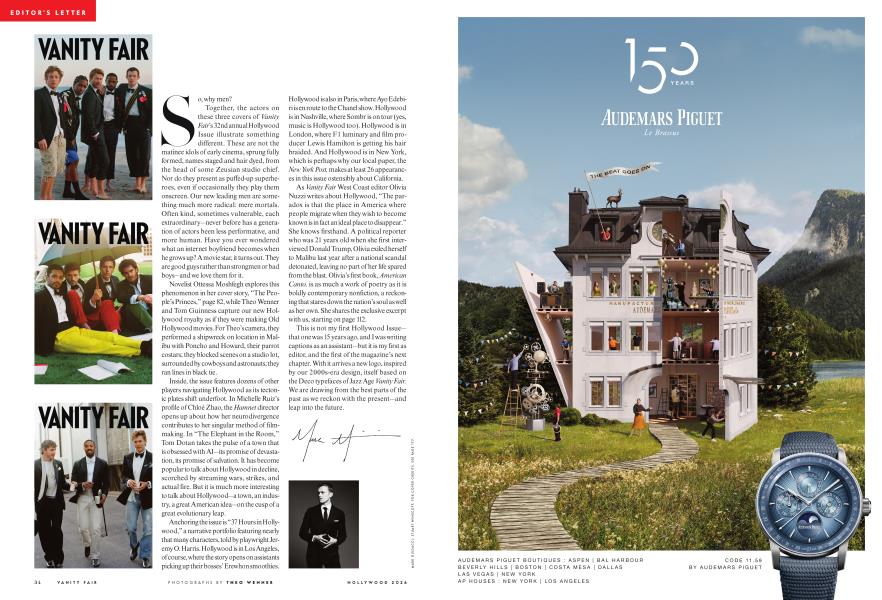
So, why men?
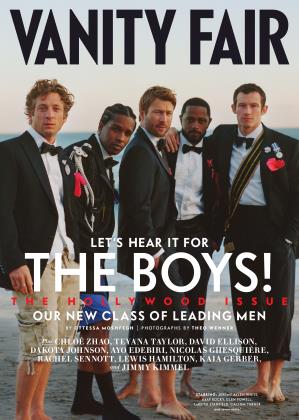
Together, the actors on these three covers of Vanity Fair's 32nd annualHollywood Issue illustrate something different. These are not the matinee idols of early cinema, sprung fully formed, names staged and hair dyed, from the head of some Zeusian studio chief. Nor do they present as puffed-up superheroes, even if occasionally they play them onscreen. Our new leading men are something much more radical: mere mortals. Often kind, sometimes vulnerable, each extraordinary—never before has a generation of actors been less performative, and more human. Have you ever wondered what an internet boyfriend becomes when he grows up? A movie star, it turns out. They are good guys rather than strongmen or bad boys—and we love them for it.
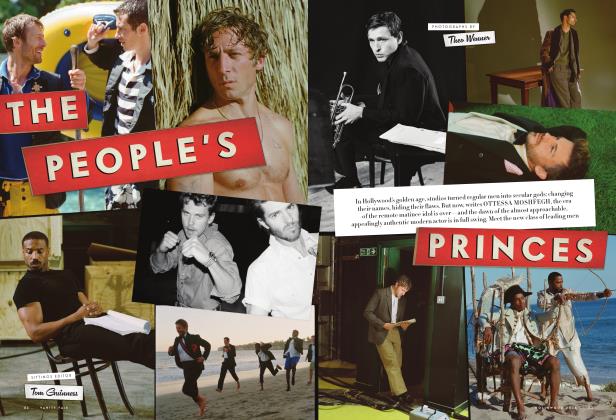
Novelist Ottessa Moshfegh explores this phenomenon in her cover story, "The People's Princes," page 82, while Theo Wenner and Tom Guinness capture our new Hollywood royalty as if they were making Old Hollywood movies. For Theo's camera, they performed a shipwreck on location in Malibu with Poncho and Howard, thenparrot costars; they blocked scenes on a studio lot, surrounded by cowboys and astronauts; they ran lines in black tie.
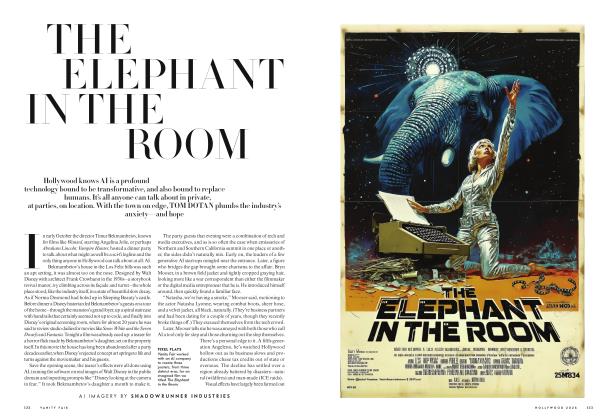
Inside, the issue features dozens of other players navigating Hollywood as its tectonic plates shift underfoot. In Michelle Ruiz's profile of Chloé Zhao, the Hamnet director opens up about how her neuro divergence contributes to her singular method of filmmaking. In "The Elephant in the Room," Tom Dotan takes the pulse of a town that is obsessed with AI—its promise of devastation, its promise of salvation. It has become popular to talk about Hollywood in decline, scorched by streaming wars, strikes, and actual fire. But it is much more interesting to talk about Hollywood—a town, an industry, a great American idea—on the cusp of a great evolutionary leap.
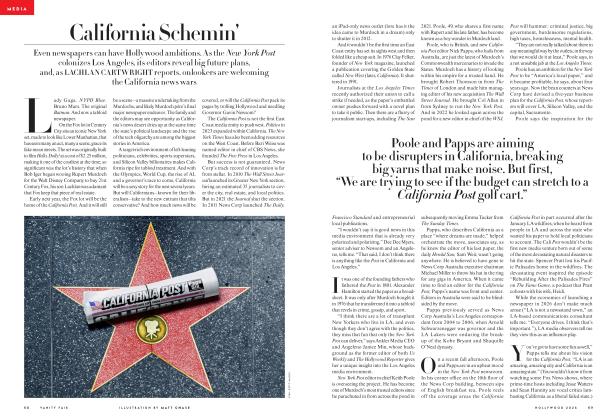
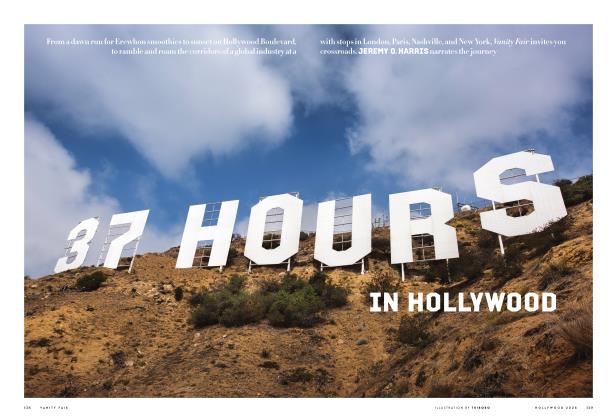
Anchoring the issue is " 37 Hours in Hollywood," a narrative portfolio featuring nearly that many characters, told by playwright Jeremy O. Harris. Hollywood is in Los Angeles, of course, where the story opens on assistants pickingup their bosses' Erewhon smoothies. Hollywood is also in Paris, where Ayo Edebiri is en route to the Chanel show. Hollywood is in Nashville, where Sombr is on tour (yes, music is Hollywood too). Hollywood is in London, where F1 luminary and film producer Lewis Hamilton is getting his hair braided. And Hollywood is in New York, which is perhaps why our local paper, the New York Post, makes at least 26 appearances in this issue ostensibly about California.
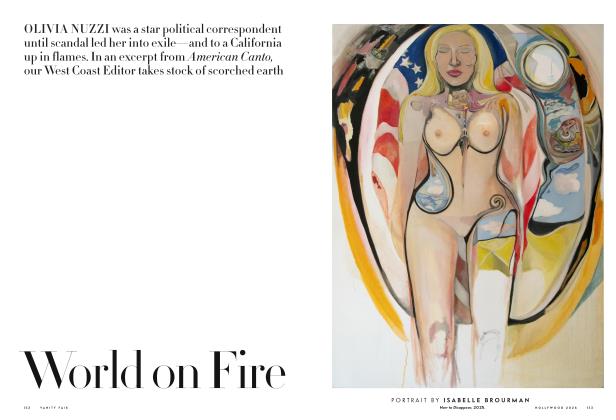
As Vanity Fair West Coast editor Olivia Nuzzi writes about Hollywood, "The paradox is that the place in America where people migrate when they wish to become known is in fact an ideal place to disappear. " She knows firsthand. A political reporter who was 21 years old when she first interviewed Donald Trump, Olivia exiled herself to Malibu last year after a national scandal detonated, leaving no part of her life spared from the blast. Olivia's first book, American Canto, is as much a work of poetry as it is boldly contemporary nonfiction, a reckoning that stares down the nation's soul as well as her own. She shares the exclusive excerpt with us, starting on page 112.
This is not my first Hollywood Issue— that one was 15 years ago, and Iwas writing captions as an assistant—but it is my first as editor, and the first of the magazine's next chapter. With it arrives a new logo, inspired by our 2000s-era design, itself based on the Deco typefaces of Jazz Age Vanity Fair. We are drawing from the best parts of the past as we reckon with the present—and leap into the future.
Subscribers have complete access to the archive.
Sign In Not a Subscriber?Join Now