







Sign In to Your Account
Subscribers have complete access to the archive.
Sign In Not a Subscriber?Join NowEDITOR'S LETTER
Fanfair and Foul Play
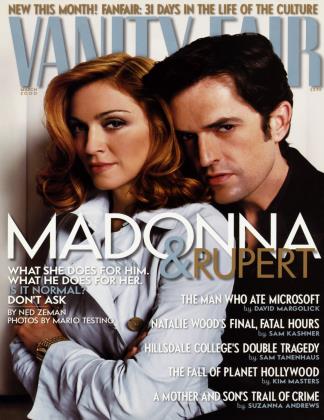
A few words about a new section that debuts in Vanity Fair this month on page 249. It's called "Fanfair," and the tag line that runs under the title is "31 Days in the Life of the Culture." If we get it right, this is what "Fanfair" will be: smart, funny, and selective notations and critiques of elements of the world culture that we feel will bear watching that month in art, books, design, travel, fashion, film, music, nightlife, TV, theater, and the Internet. And we're not talking here about events just in New York or Los Angeles. Because Vanity Fair, alone among major monthlies, goes around the world in a single, basic edition—the one we put out here at 4 Times Square—"Fanfair"'s reach will be relatively global.
The section this month includes contributions by James Wolcott, Walter Kirn, David Kamp, Bruce Handy, A. M. Homes, Henry Alford, Lisa Robinson, Elissa Schappell, George Wayne, and Toby Young, among others. It's edited by John Gillies and Anne Fulenwider, with help from Riza Cruz and Dana Brown, and with a certain amount of oversight from Aimée Bell and Matt Tyrnauer. New sections in magazines take a few months to hit their stride, so please don't jump on us if "Fanfair" doesn't come out exactly as you would expect. If, on the other hand, you like it from the beginning, so much the better.
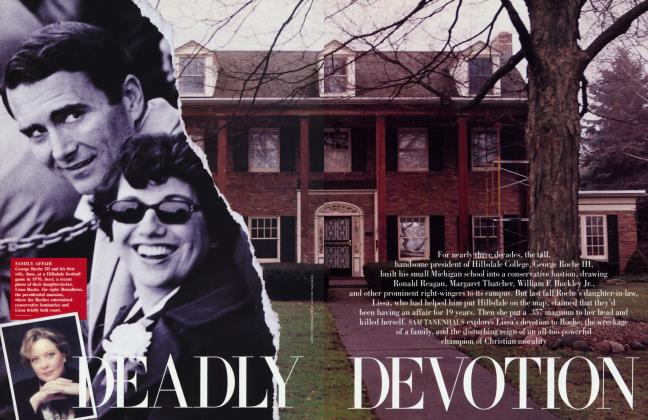
There are three major crime and scandal stories in this issue. Check them all out. The tragedy at Hillsdale College, that bastion of American conservatism in south Michigan, is the subject of Sam Tanenhaus's report on page 182. The events surrounding the story are remarkable. They center on the suicide of -Lissa Roche, the school's 41-year-old administrator, who, before her death, claimed to have had a 19-year affair with Hillsdale's president, George Roche III. The fact that she was married to Roche's son the entire time only added to the stress put upon family members and faculty, not to mention the preachy, preening mandarins of the conservative movement.
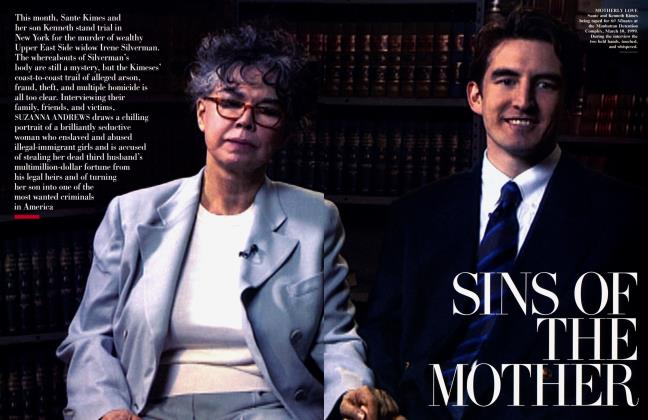
On page 200, Suzanna Andrews follows the long trail of crime of Sante Kimes, by all accounts a perennial grifter, and Kimes's son Kenneth, whom she allegedly molded into a dangerous and devoted partner. These two are a pair. Police have wanted them in connection with fraud, arson, theft, and homicide. Indeed, they go on trial this month in Manhattan for the murder of Irene Silverman, a spirited, iconoclastic social figure who had turned her East Side mansion into a fashionable boardinghouse that took in the likes of Peter Duchin and Daniel Day-Lewis.
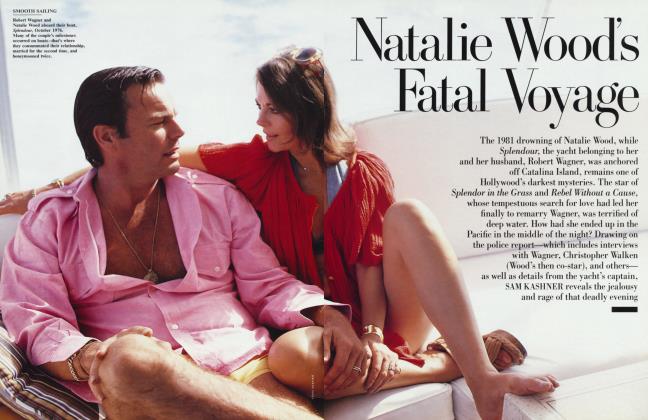
And, lastly, there is Sam Kashner's examination on page 214 of the 18-year-old mystery surrounding the death by drowning of Natalie Wood off the coast of Catalina Island. She was last seen aboard the boat she owned with her husband, Robert Wagner, Splendour, on a night of vigorous drinking and arguing. The only other people on board that evening were Wagner, the skipper, and actor Christopher Walken. In compelling narrative detail, Kashner reconstructs the hours leading up to the actress's drowning and those immediately afterward.
Sorry for the hard sell on the issue. Just be relieved this wasn't all about the new script typeface we've introduced. Maybe later on that one.
GRAYDON CARTER





Subscribers have complete access to the archive.
Sign In Not a Subscriber?Join Now