Sign In to Your Account
Subscribers have complete access to the archive.
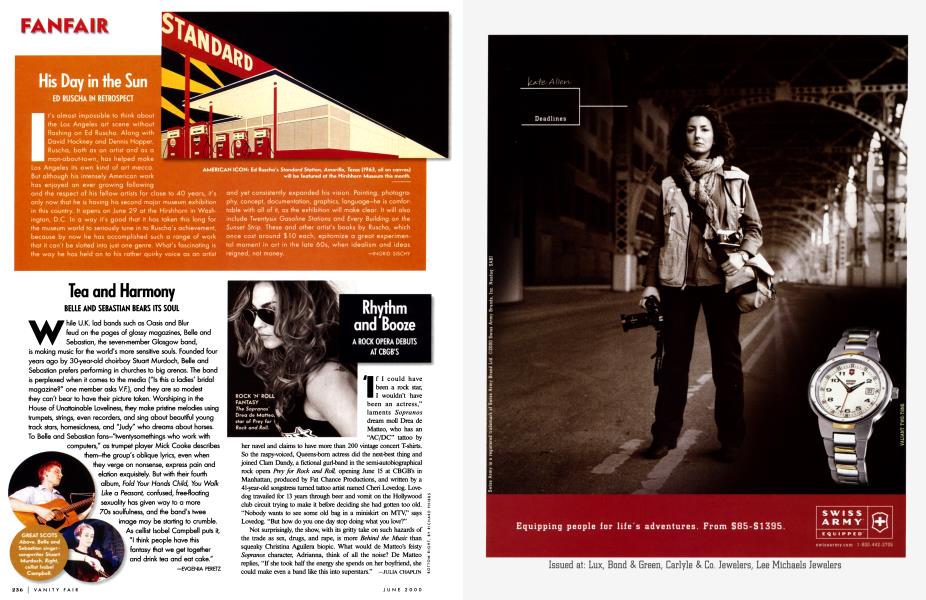
Sign In Not a Subscriber?Join NowIt's almost impossible to think about the Los Angeles art scene without flashing on Ed Ruscha. Along with David Hockney and Dennis Hopper, Ruscha, both as an artist and as man-about-town, has helped make Los Angeles its own kind of art mecca. But although his intensely American work has enjoyed an ever growing following and the respect of his fellow artists for close to 40 years, it's only now that he is having his second major museum exhibition in this country. It opens on June 29 at the Hirshhorn in Washington, D.C. In a way it's good that it has taken this long for the museum world to seriously tune in to Ruscha's achievement, because by now he has accomplished such a range of work that it can't be slotted into just one genre. What's fascinating is the way he has held on to his rather quirky voice as an artist and yet consistently expanded his vision. Painting, photography, concept, documentation, graphics, language—he is comfortable with all of it, as the exhibition will make clear. It will also include Twentysix Gasoline Stations and Every Building on the Sunset Strip. These and other artist's books by Ruscha, which once cost around $10 each, epitomize a great experimental moment in art in the late 60s, when idealism and ideas reigned, not money.
Subscribers have complete access to the archive.
Sign In Not a Subscriber?Join Now