



Sign In to Your Account
Subscribers have complete access to the archive.
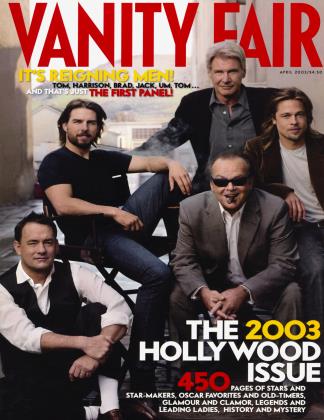
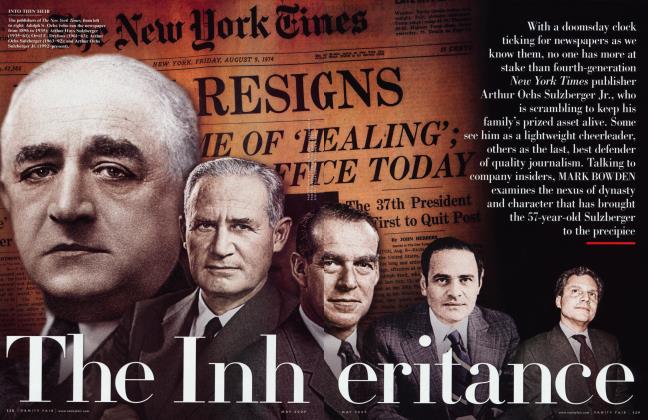
Sign In Not a Subscriber?Join NowUnmistakable signs that spring is just around the corner: H&R Block ads. Oscar fever. Snowdrops. And—yes, here it comes, ta-da!― V.F.’s fabulous, one-and-only, 100 percent cholesterol-free annual roundup of Hollywood legends, big guns, and scene-stealers. On the next 41 pages, find out who made the cast of 2003
Unmistakable signs that spring is just around the corner: H&R Block ads. Oscar fever. Snowdrops. And—yes, here it comes, ta-da!― V.F.’s fabulous, one-and-only, 100 percent cholesterol-free annual roundup of Hollywood legends, big guns, and scene-stealers. On the next 41 pages, find out who made the cast of 2003
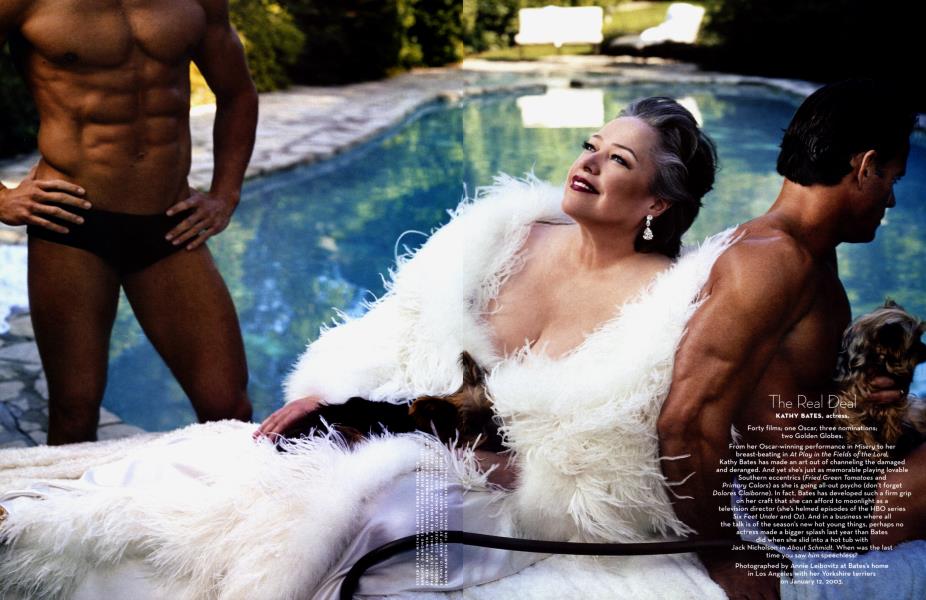
KATHY BATES, actress.
Forty films; one Oscar, three nominations; two Golden Globes.
From her Oscar-winning performance in Misery to her breast-beating in At Play in the Fields of the Lord, Kathy Bates has made an art out of channeling the damaged deranged. And yet she’s just as memorable playing lovable Southern eccentrics (Fried Green Tomatoes and Primary Colors) as she is going all-out psycho (don’t forget Dolores Claiborne). In fact, Bates has developed such a firm grip on her craft that she can afford to moonlight as a ‘vision director (she’s helmed episodes of the HBO series Six Feet Under and Oz). And in a business where all talk is of the season’s new hot young things, perhaps no actress made a bigger splash last year than Bates did when she slid into a hot tub with Jack Nicholson in About Schmidt. When was the last time you saw him speechless?
Photographed by Annie Leibovitz at Bates’s home in Los Angeles with her Yorkshire terriers on January 12, 2003.
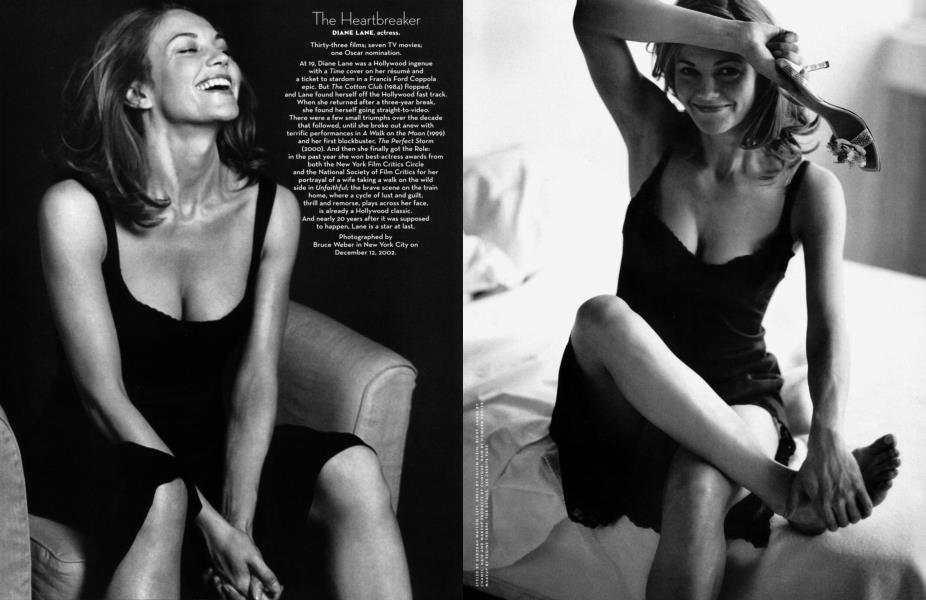
DIANE LANE, actress.
Thirty-three films; seven TV movies; one Oscar nomination.
At 19, Diane Lane was a Hollywood ingenue with a Time cover on her résumé and a ticket to stardom in a Francis Ford Coppola epic. But The Cotton Club (1984) flopped, and Lane found herself off the Hollywood fast track. When she returned after a three-year break, she found herself going straight-to-video. There were a few small triumphs over the decade that followed, until she broke out anew with terrific performances in A Walk on the Moon (1999) and her first blockbuster. The Perfect Storm (2000). And then she finally got the Role: in the past year she won best-actress awards from both the New York Film Critics Circle and the National Society of Film Critics for her portrayal of a wife taking a walk on the wild side in Unfaithful; the brave scene on the train home, where a cycle of lust and guilt, thrill and remorse, plays across her face, is already a Hollywood classic. And nearly 20 years after it was supposed to happen, Lane is a star at last.
Photographed by Bruce Weber in New York City on December 12, 2002.
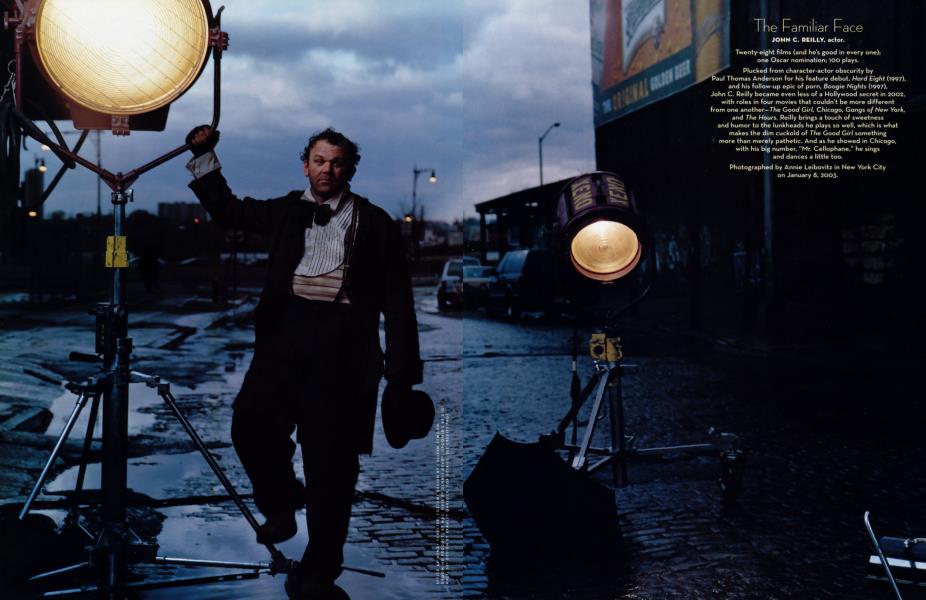
JOHN C. REILLY, actor.
Twenty-eight films (and he’s good in every one); one Oscar nomination; 100 plays.
Plucked from character-actor obscurity by Paul Thomas Anderson for his feature debut. Hard Eight (1997), and his follow-up epic of porn, Boogie Nights (1997).
John C. Reilly became even less of a Hollywood secret in 2002, with roles in four movies that couldn’t be more different from one another—The Good Girl, Chicago, Gangs of New York, and The Hours. Reilly brings a touch of sweetness and humor to the lunkheads he plays so well, which is what makes the dim cuckold of The Good Girl something more than merely pathetic. And as he showed in Chicago, with his big number, “Mr. Cellophane,” he sings and dances a little too.
Photographed by Annie Leibovitz in New York City on January 8, 2003.
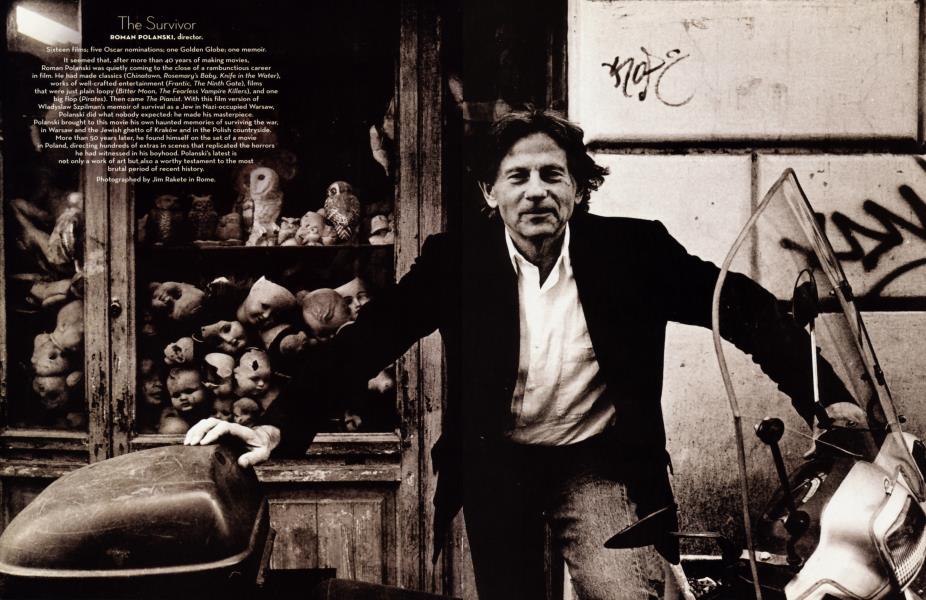
Sixteen films; five Oscar nominations; one Golden Globe; one memoir. It seemed that, after more than 40 years of making movies, Roman Polanski was quietly coming to the close of a rambunctious career in film. We had made classics (Chinatown, Rosemary’s Baby, Knife in the Water), works of well-crafted entertainment (Frantic, The Ninth Gate), films that were just plain loopy (Bitter Noon, The Fearless Vampire Killers), and one big flop (Pirates). Then came The Pianist. With this film version of Wladyslaw Szpilman’s memoir of survival as a Jew in Nazi-occupied Warsaw, Polanski did what nobody expected: he made his masterpiece. Polanski brought to this movie his own haunted memories of surviving the war, in Warsaw and the Jewish ghetto of Krakow and in the Polish countryside. More than 50 years later, he found himself on the set of a movie in Poland, directing hundreds of extras in scenes that replicated the horrors he had witnessed in his boyhood. Polanski's latest is not only a work of art but also a worthy testament to the most brutal period of recent history.
Photographed by Jim Rakete in Rome.
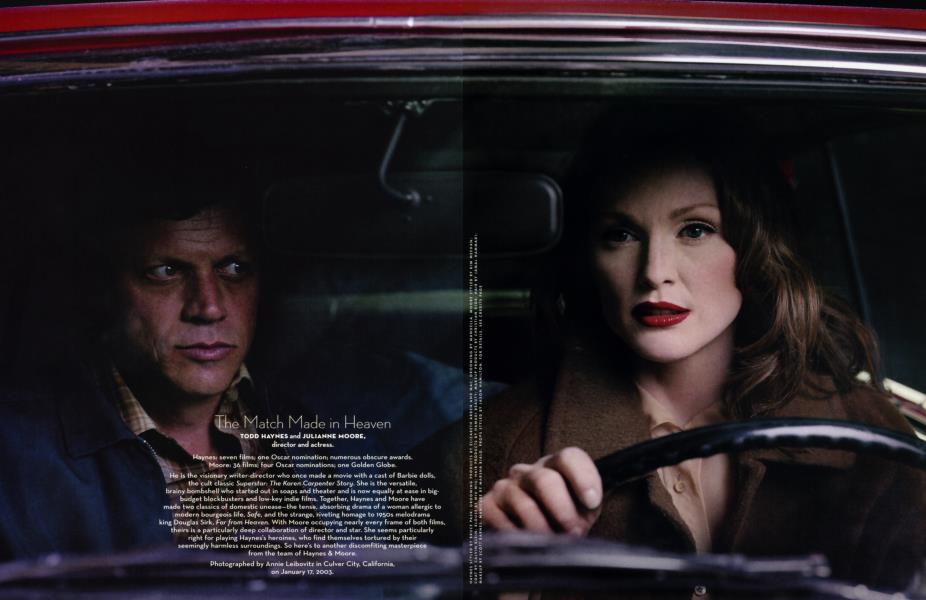
TODD HAYNES and JULIANNE MOORE, director and actress.
Haynes: seven films; one Oscar nomination; numerous obscure awards.
Moore: 36 films; four Oscar nominations; one Golden Globe.
He is the visionary writer-director who once made a movie with a cast of Barbie dolls, the cult classic Superstar: The Karen Carpenter Story. She is the versatile, brainy bombshell who started out in soaps and theater and is now equally at ease in big-budget blockbusters and low-key indie films. Together, Haynes and Moore have made two classics of domestic unease—the tense, absorbing drama of a woman allergic to modern bourgeois life, Safe, and the strange, riveting homage to 1950s melodrama king Douglas Sirk, Far from Heaven. With Moore occupying nearly every frame of both films, theirs is a particularly deep collaboration of director and star. She seems particularly right for playing Haynes’s heroines, who find themselves tortured by their seemingly harmless surroundings. So here’s to another discomfiting masterpiece from the team of Haynes & Moore.
Photographed by Annie Leibovitz in Culver City, California, on January 17, 2003.
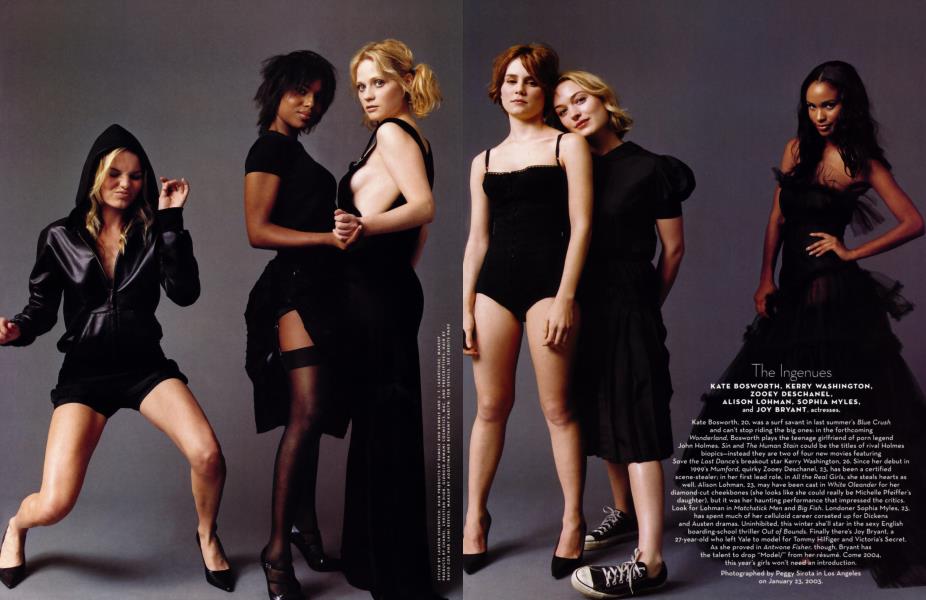
KATE BOSWORTH, KERRY WASHINGTON, ZOOEY DESCHANEL, ALISON LOHMAN, SOPHIA MYLES, and JOY BRYANT, actresses.
Kate Bosworth, 20, was a surf savant in last summer's Blue Crush and can't stop riding the big ones: in the forthcoming Wonderland, Bosworth plays the teenage girlfriend of porn legend John Holmes. Sin and The Numan Stain could be the titles of rival Holmes biopics—instead they are two of four new movies featuring Save the Last Dance's breakout star Kerry Washington, 26, Since her debut in 1999's Mumford, quirky Zooey Deschanel, 23, has been a certified scene-stealer; in her first lead role, in All the Real Girls, she steals hearts as well. Alison Lohman, 23, may have been cast in White Oleander for her diamond-cut cheekbones (she looks like she could really be Michelle Pfeiffer's daughter), but it was her haunting performance that impressed the critics. Look for Lohman in Matchstick Men and Big Fish. Londoner Sophia Myles, 23, has spent much of her celluloid career corseted up for Dickens and Austen dramas. Uninhibited, this winter she'll star in the sexy English boarding-school thriller Out of Bounds. Finally there's Joy Bryant, a 27-year-old who left Yale to model for Tommy Hilfiger and Victoria’s Secret. As she proved in Antwone Fisher, though. Bryant has the talent to drop “Model/” from her resume. Come 2004. this year's girls won't need an introduction.
Photographed by Peggy Sirota in Los Angeles on January 23, 2003.
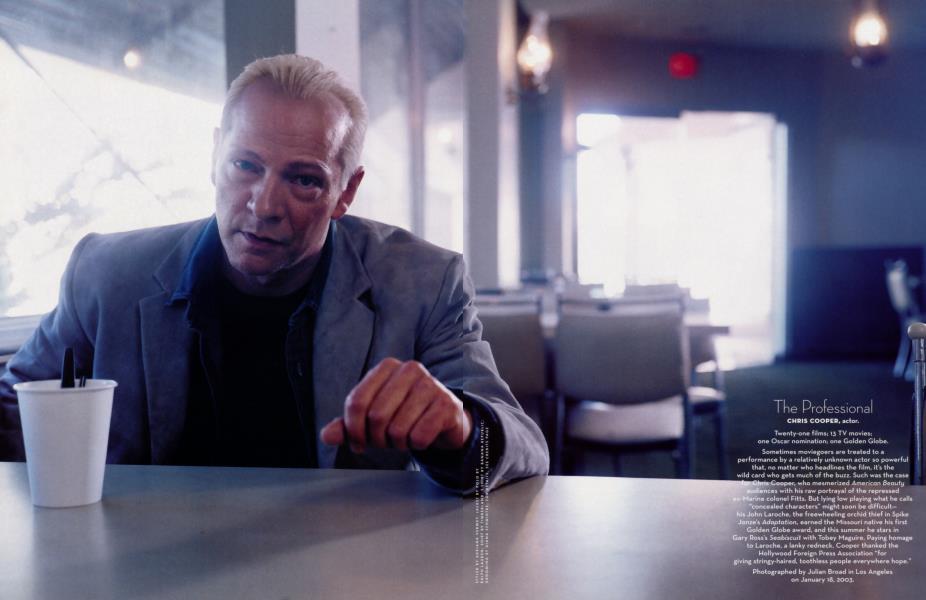
CHRIS COOPER, actor.
Twenty-one films; 13 TV movies; one Oscar nomination; one Golden Globe.
Sometimes moviegoers are treated to a performance by a relatively unknown actor so powerful that, no matter who headlines the film, it’s the wild card who gets much of the buzz. Such was the case Cooper, who mesmerized American Beauty audiences with his raw portrayal of the repressed ex-Marine colonel Fitts. But lying low playing what he calls “concealed characters” might soon be difficult— his John Laroche, the freewheeling orchid thief in Spike Jonze’s Adaptation, earned the Missouri native his first Golden Globe award, and this summer he stars in Gary Ross’s Seabiscuit with Tobey Maguire. Paying homage to Laroche, a lanky redneck, Cooper thanked the Hollywood Foreign Press Association “for giving stringy-haired, toothless people everywhere hope.”
Photographed by Julian Broad in Los Angeles on January 18, 2003.
 THE HOLLYWOOD PORTFOLIO
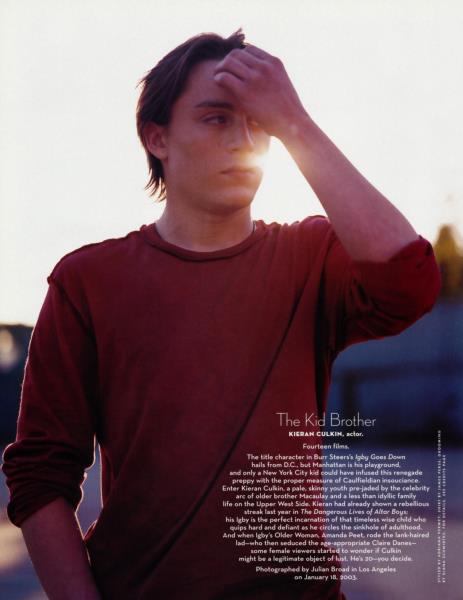
KIERAN CULKIN, actor.
Fourteen films.
The title character in Burr Steerss lgby Goes Down hails from D.C., but Manhattan is his playground, and only a New York City kid could have infused this renegade preppy with the proper measure of Caulfieldian insouciance. Enter Kieran Culkin, a pale, skinny youth pre-jaded by the celebrity arc of older brother Macaulay and a less than idyllic family life on the Upper West Side. Kieran had already shown a rebellious streak last year in The Dangerous Lives of Altar Boys; his lgby is the perfect incarnation of that timeless wise child who quips hard and defiant as he circles the sinkhole of adulthood. And when lgby's Older Woman, Amanda Peet, rode the lank-haired lad—who then seduced the age-appropriate Claire Danes—some female viewers started to wonder if Culkin might be a legitimate object of lust. He's 20—you decide.
Photographed by Julian Broad in Los Angeles on January 18. 2003.
 THE HOLLYWOOD PORTFOLIO
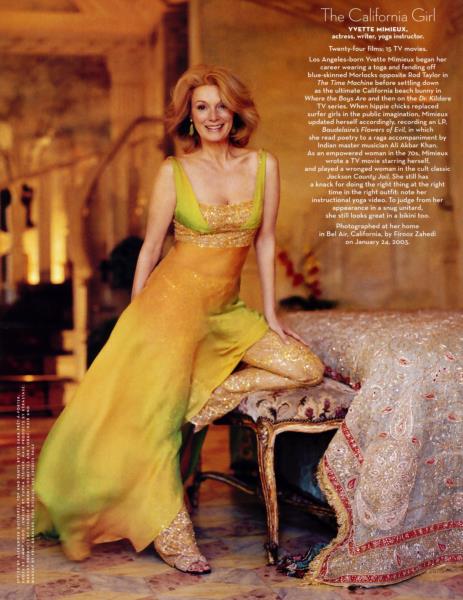
YVETTE MIMIEUX, actress, writer, yoga instructor.
Twenty-four films; 15 TV movies.
Los Angeles-born Yvette Mimieux began her career wearing a toga and fending off blue-skinned Morlocks opposite Rod Taylor in The Time Machine before settling down as the ultimate California beach bunny in Where the Boys Are and then on the Dr. Kildare TV series. When hippie chicks replaced surfer girls in the public imagination, Mimieux updated herself accordingly, recording an LP. Baudelaire's Flowers of Evil, in which she read poetry to a raga accompaniment by Indian master musician Ali Akbar Khan. As an empowered woman in the 70s, Mimieux wrote a TV movie starring herself, and played a wronged woman in the cult classic Jackson County Jail. She still has a knack for doing the right thing at the right time in the right outfit: note her instructional yoga video. To judge from her appearance in a snug unitard, she still looks great in a bikini too.
Photographed at her home in Bel Air, California, by Firooz Zahedi on January 24. 2003
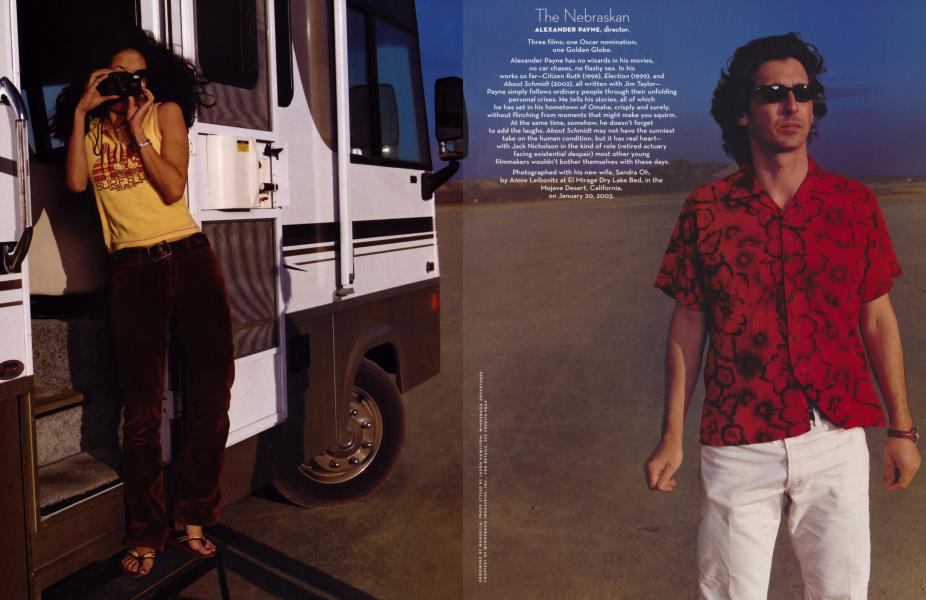
ALEXANDER PAYNE, director.
Three films; one Oscar nomination; one Golden Globe.
Alexander Payne has no wizards in his movies, no car chases, no flashy sex. In his works so far— Citizen Ruth (1996), Election (1999). and About Schmidt (2002), all written with Jim Taylor— Payne simply follows ordinary people through their unfolding personal crises. Me tells his stories, all of which he has set in his hometown of Omaha, crisply and surely, without flinching from moments that might make you squirm. At the same time, somehow, he doesn’t forget to add the laughs. About Schmidt may not have the sunniest take on the human condition, but it has real heart— with Jack Nicholson in the kind of role (retired actuary facing existential despair) most other young filmmakers wouldn’t bother themselves with these days.
Photographed with his new wife, Sandra Oh, by Annie Leibovitz at El Mirage Dry Lake Bed, in the Mojave Desert, California, on January 20, 2003
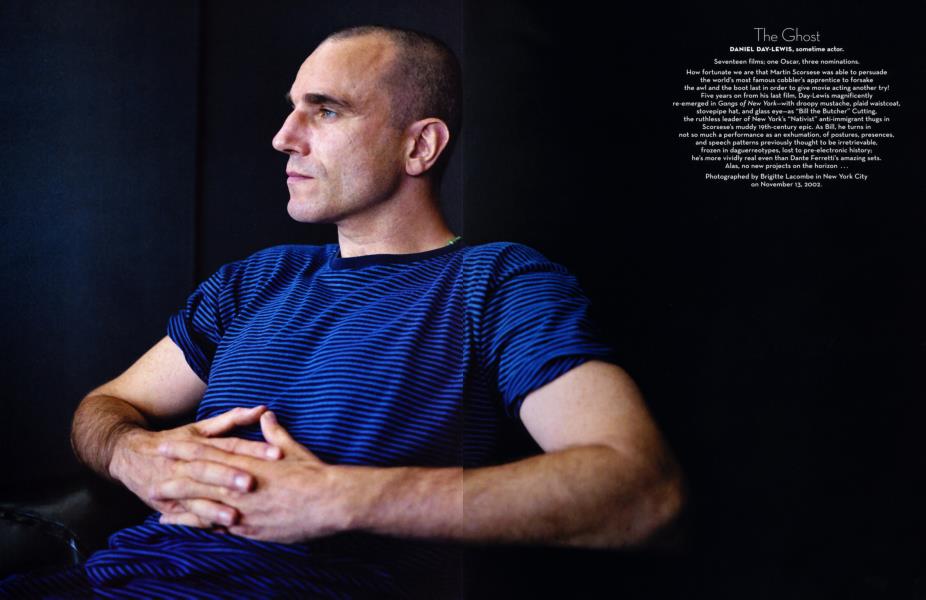
DANIEL DAY-LEWIS, sometime actor.
Seventeen films; one Oscar, three nominations.
How fortunate we are that Martin Scorsese was able to persuade the world’s most famous cobbler’s apprentice to forsake the awl and the boot last in order to give movie acting another try! Five years on from his last film, Day-Lewis magnificently re-emerged in Gangs of New York—with droopy mustache, plaid waistcoat, stovepipe hat, and glass eye—as “Bill the Butcher” Cutting, the ruthless leader of New York’s “Nativist" anti-immigrant thugs in Scorsese’s muddy 19th-century epic. As Bill, he turns in not so much a performance as an exhumation, of postures, presences, and speech patterns previously thought to be irretrievable, frozen in daguerreotypes, lost to pre-electronic history; he’s more vividly real even than Dante Ferretti’s amazing sets. Alas, no new projects on the horizon . . .
Photographed by Brigitte Lacombe in New York City on November 13, 2002.
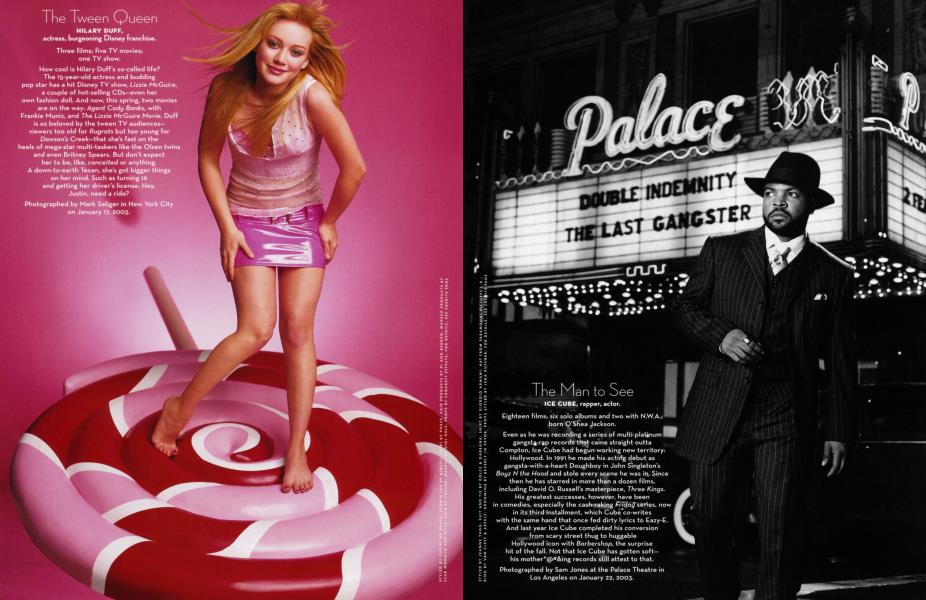
HILARY DUFF, actress, burgeoning Disney franchise.
Three films; five TV movies; one TV show.
How cool is Hilary Duff’s so-called life? The 15-year-old actress and budding pop star has a hit Disney TV show, Lizzie McGuire, a couple of hot-selling CDs—even her own fashion doll. And now, this spring, two movies are on the way: Agent Cody Banks, with Frankie Muniz, and The Lizzie McGuire Movie. Duff is so beloved by the tween TV audiences—viewers too old for Rugrats but too young for Dawson's Creek—that she’s fast on the heels of mega-star multi-taskers like the Olsen twins and even Britney Spears. But don’t expect her to be, like, conceited or anything. A down-to-earth Texan, she’s got bigger things on her mind. Such as turning 16 and getting her driver’s license. Hey, Justin, need a ride?
Photographed by Mark Seliger in New York City on January 17, 2003.
ICE CUBE, rapper, actor.
Eighteen films; six solo albums and two with N.W.A.; born O’Shea Jackson.
Even as he was recording a series of multi-platinum gangsta-rap records that came straight outta Compton, Ice Cube had begun working new territory: Hollywood. In 1991 he made his acting debut as gangsta-with-a-heart Doughboy in John Singleton’s Boyz N the Hood and stole every scene he was in. Since then he has starred in more than a dozen films, including David O. Russell's masterpiece, Three Kings. His greatest successes, however, have been in comedies, especially the cash-raking Friday series, now in its third installment, which Cube co-writes with the same hand that once fed dirty lyrics to Eazy-E. And last year Ice Cube completed his conversion from scary street thug to huggable Hollywood icon with Barbershop, the surprise hit of the fall. Not that Ice Cube has gotten soft— his mother*@*&ing records still attest to that.
Photographed by Sam Jones at the Palace Theatre in Los Angeles on January 22, 2003.
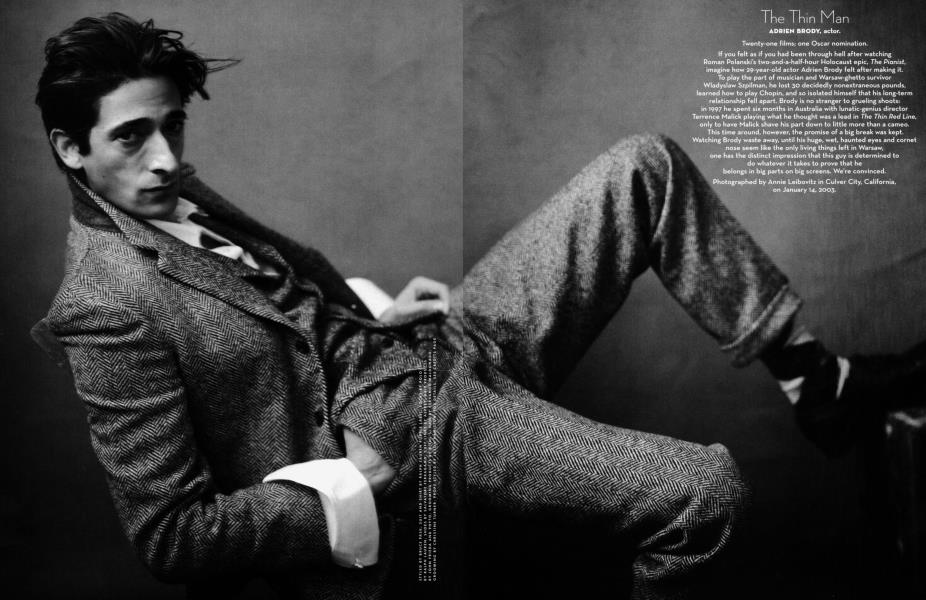
ADRIEN BRODY, actor.
Twenty-one films; one Oscar nomination.
If you felt as if you had been through hell after watching Roman Polanski's two-and-a-half-hour Holocaust epic, The Pianist, imagine how 29-year-old actor Adrien Brody felt after making it. To play the part of musician and Warsaw-ghetto survivor Wladyslaw Szpilman, he lost 30 decidedly nonextraneous pounds, learned how to play Chopin, and so isolated himself that his long-term relationship fell apart. Brody is no stranger to grueling shoots: in 1997 he spent six months in Australia with lunatic-genius director Terrence Malick playing what he thought was a lead inThe Thin Red Line, only to have Malick shave his part down to little more than a cameo. This time around, however, the promise of a big break was kept. Watching Brody waste away, until his huge, wet, haunted eyes and cornet nose seem like the only living things left in Warsaw, one has the distinct impression that this guy is determined to do whatever it takes to prove that he belongs in big parts on big screens. We’re convinced.
Photographed by Annie Leibovitz in Culver City, California, on January 14, 2003.
 THE HOLLYWOOD PORTFOLIO
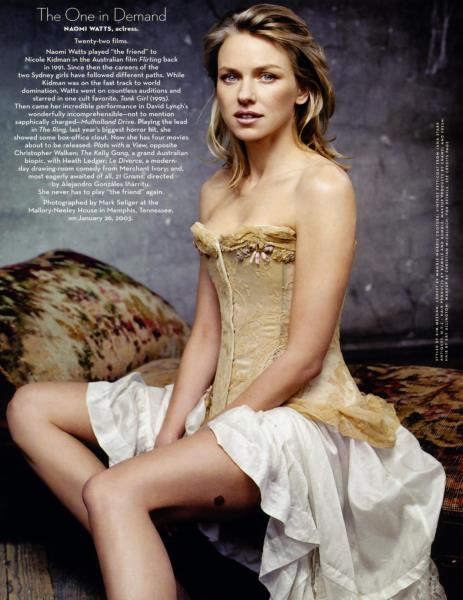
NAOMI WATTS, actress.
Twenty-two films.
Naomi Watts played "the friend” to Nicole Kidman in the Australian film Flirting back in 1991. Since then the careers of the two Sydney girls have followed different paths. While Kidman was on the fast track to world domination. Watts went on countless auditions and starred in one cult favorite, Tank Girl (1995). Then came her incredible performance in David Lynch’s wonderfully incomprehensible—not to mention sapphically charged—Mulholland Drive. Playing the lead in The Ping, last year’s biggest horror hit, she showed some box-office clout. Now she has four movies about to be released: Plots with a View, opposite Christopher Walken; The Kelly Gang, a grand Australian biopic, with Neath Ledger; Le Divorce, a modern-day drawing-room comedy from Merchant Ivory; and, most eagerly awaited of all, 21 Grams, directed by Alejandro González Iñárritu. She never has to play “the friend” again.
Photographed by Mark Seliger at the Mallory-Neeley Mouse in Memphis, Tennessee, on January 26, 2003.
 THE HOLLYWOOD PORTFOLIO
CHRISTOPHER WALKEN, actor.
Sixty-eight films; 11 TV movies; one Oscar, two nominations; nearly as many appearances hosting Saturday Night Live as Alec Baldwin.
For someone who has made films at the rate of nearly two and a half per year over the last three decades, Christopher Walken may still be one of our most underused actors. So often called upon to play spooky or kooky, he has become one of the movies' most reliable weirdos, up there in the oddball pantheon-attic with Dennis Hopper andd the late John Carradine. And a great thing, that. But what a joy to see him in Steven Spielberg's Catch Me If You Can, where, as Leonardo DiCaprio's downwardly mobile dad, broken but never bowed, he gave an otherwise breezy movie its soul, won an Academy Award nomination, and reminded us what a powerful and versatile actor he really is.
Photographed by Mark Seliger in Los Angeles on January 18, 2003.
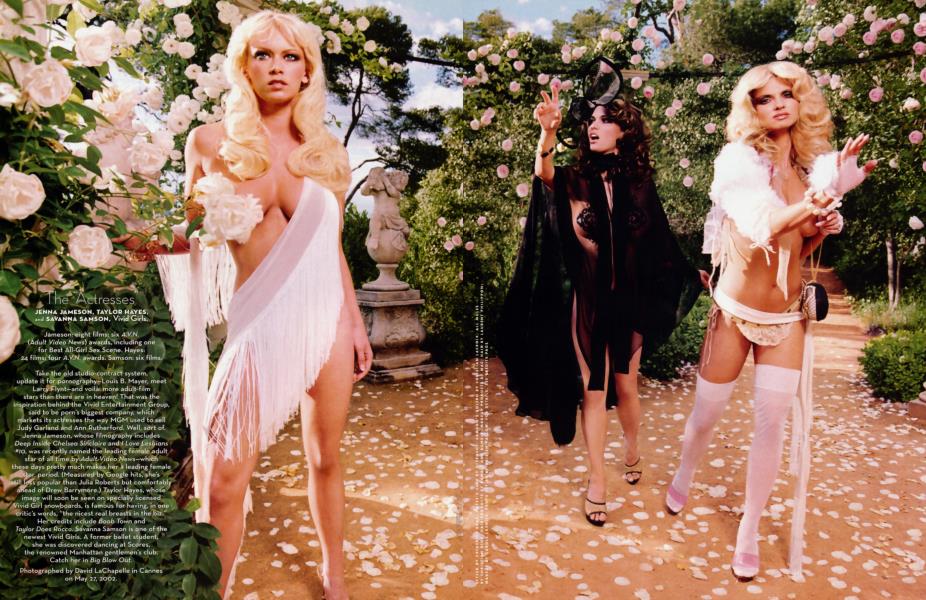
JENNA JAMESON, TAYLOR HAYES, and SAVANNA SAMSON, Vivid Girls.
Jameson eight films; six A.V.N. (Adult Video News) awards, including one for Best All-Girl Sex Scene. Hayes: 24 films; four A.V.N. awards. Samson: six films.
Take the old studio contract-system, update it for pornography, —Louis B. Mayer, meet Larry Flynt—and voilà: more adult-film stars than there are in heaven! That was the inspiration behind the Vivid Entertainment Group, said to be porn's biggest company, which markets its actresses the way MGM used to sell Judy Garland and Ann Rutherford. Well, sort of. Jenna Jameson, whose filmography includes Deep Inside Chelsea Sinclaire and I Love Lesbians #10, was recently named the leading female adult star of all time by Adult Video News—which these days pretty much makes her a leading female star, period. (Measured by Google hits, she's still less popular than Julia Roberts but comfortably ahead of Drew Barrymore.) Taylor Hayes, whose image will soon be seen on specially licensed Vivid Girls snowboards, is famous for having, in one critic's words, "the nicest real breasts in the biz." Her credits include Boob Town and Taylor Does Rocco. Savanna Samson is one of the newest Vivid Girls. A former ballet student, she was discovered dancing at Scores, the renowned Manhattan gentlemen's club. Catch her in Big Blow Out.
Photographed by David LaChapelle in Cannes on May 27, 2002.
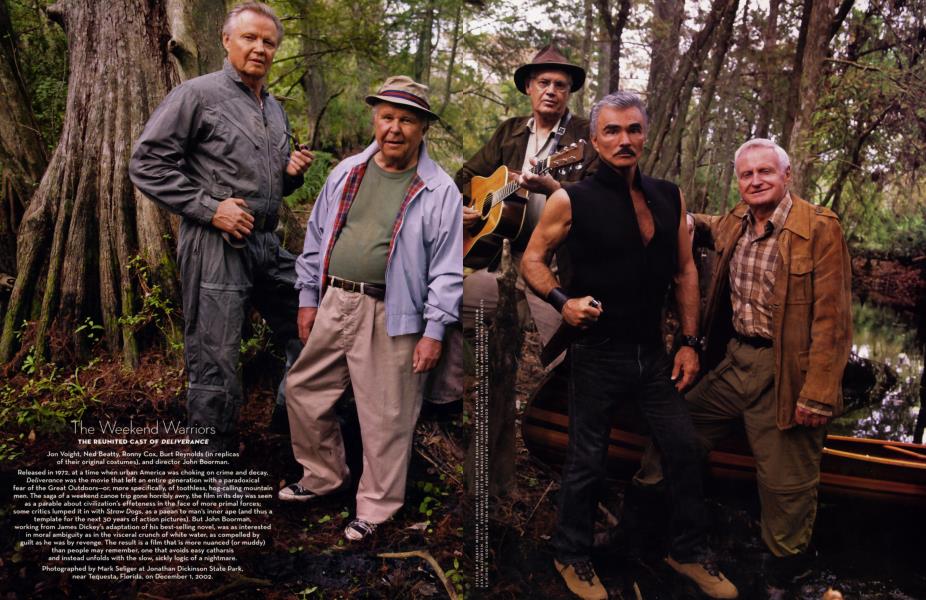
THE REUNITED CAST OF DELIVERANCE
Jon Voight, Ned Beatty, Ronny Cox, Burt Reynolds (in replicas of their original costumes), and director John Boorman.
Released in 1972, at a time when urban America was choking on crime and decay, Deliverance was the movie that left an entire generation with a paradoxical fear of the Great Outdoors-or, more specifically, of toothless, hog-calling mountain men. The saga of a weekend canoe trip gone horribly awry, the film in its day was seen as a parable about civilization's effeteness in the face of more primal forces; some critics lumped it in with Straw Dogs, as a paean to man's inner ape (and thus a template for the next 30 years of action pictures). But John Boorman, working from James Dickey's adaptation of his best-selling novel, was as interested in moral ambiguity as in the visceral crunch of white water, as compelled by guilt as he was by revenge. The result is a film that is more nuanced (or muddy) than people may remember, one that avoids easy catharsis and instead unfolds with the slow, sickly logic of a nightmare.
Photographed by Mark Seliger at Jonathan Dickinson State Park, near Tequesta, Florida, on December 1, 2002.
 THE HOLLYWOOD PORTFOLIO
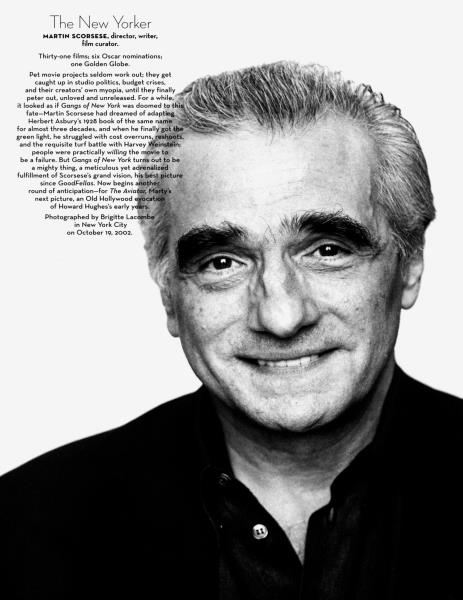
MARTIN SCORSESE, director, writer, film curator.
Thirty-one films; six Oscar nominations; one Golden Globe.
Pet movie projects seldom work out; they get caught up in studio politics, budget crises, and their creators’ own myopia, until they finally peter out, unloved and unreleased. For a while, it looked as if Gangs of New York was doomed to this fate—Martin Scorsese had dreamed of adapting Herbert Asbury’s 1928 book of the same name for almost three decades, and when he finally got the green light, he struggled with cost overruns, reshoots, and the requisite turf battle with Harvey Weinstein; people were practically willing the movie to be a failure. But Gangs of New York turns out to be a mighty thing, a meticulous yet adrenalized fulfillment of Scorsese’s grand vision, his best picture since GoodFellas. Now begins another round of anticipation—for The Aviator, Marty’s next picture, an Old Hollywood evocation of Howard Hughes’s early years.
Photographed by Brigitte Lacombe in New York City on October 19, 2002.
 THE HOLLYWOOD PORTFOLIO
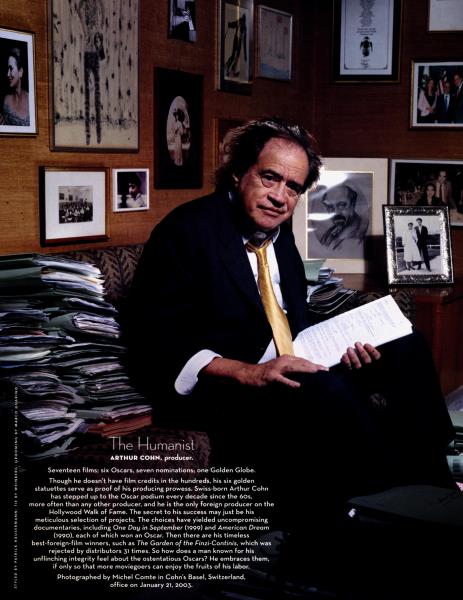
ARTHUR COHN, producer.
Seventeen films; six Oscars, seven nominations; one Golden Globe.
Though he doesn’t have film credits in the hundreds, his six golden statuettes serve as proof of his producing prowess. Swiss-born Arthur Cohn has stepped up to the Oscar podium every decade since the 60s, more often than any other producer, and he is the only foreign producer on the Hollywood Walk of Fame. The secret to his success may just be his meticulous selection of projects. The choices have yielded uncompromising documentaries, including One Day in September (1999) and American Dream (1990), each of which won an Oscar. Then there are his timeless best-foreign-film winners, such as The Garden of the Finzi-Continis, which was rejected by distributors 31 times. So how does a man known for his unflinching integrity feel about the ostentatious Oscars? He embraces them, if only so that more moviegoers can enjoy the fruits of his labor.
Photographed by Michel Comte in Cohn’s Basel, Switzerland, office on January 21, 2003.
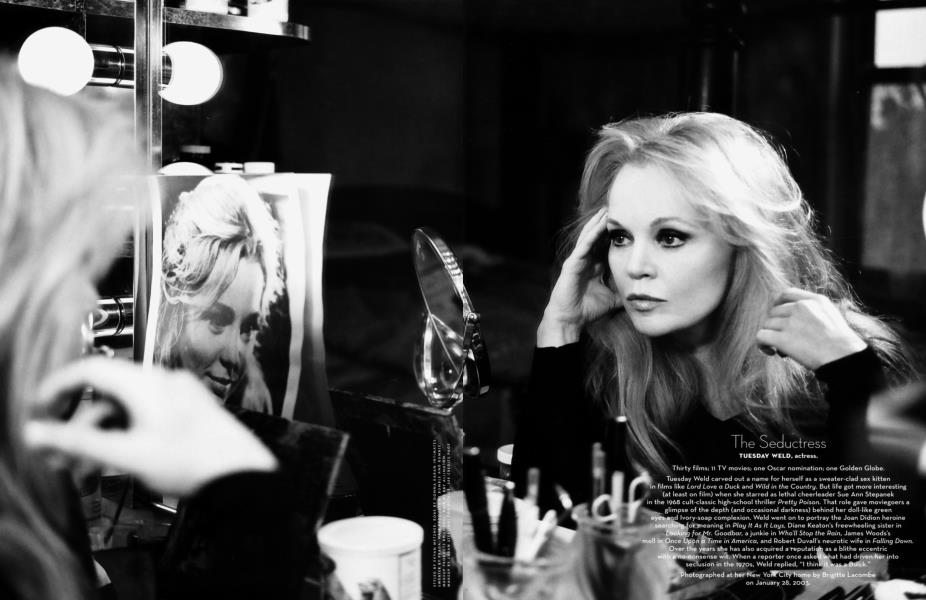
TUESDAY WELD, actress.
Thirty films; ii TV movies; one Oscar nomination; one Golden Globe.
Tuesday Weld carved out a name for herself as a sweater-clad sex kitten in films like Lord Love a Duck and Wild in the Country. But life got more interesting (at least on film) when she starred as lethal cheerleader Sue Ann Stepanek in the 1968 cult-classic high-school thriller Pretty Poison. That role gave moviegoers a glimpse of the depth (and occasional darkness) behind her doll-like green -ad Ivory-soap complexion. Weld went on to portray the Joan Didion heroine searching for meaning in Play It As It Lays, Diane Keaton's freewheeling sister in Looking for Mr. Goodbar, a junkie in Who'll Stop the Pain, James Woods's moll in Once Upon a Time in America, and Robert Duvall's neurotic wife in Falling Down. Over the years she has also acquired a reputation as a blithe eccentric no-nonsense wit. When a reporter once asked what had driven her jnto seclusion in the 1970s, Weld replied, "I think it was a Buick."
Photographed at her New York City home by Brigitte Lacombe on January 28, 2003.
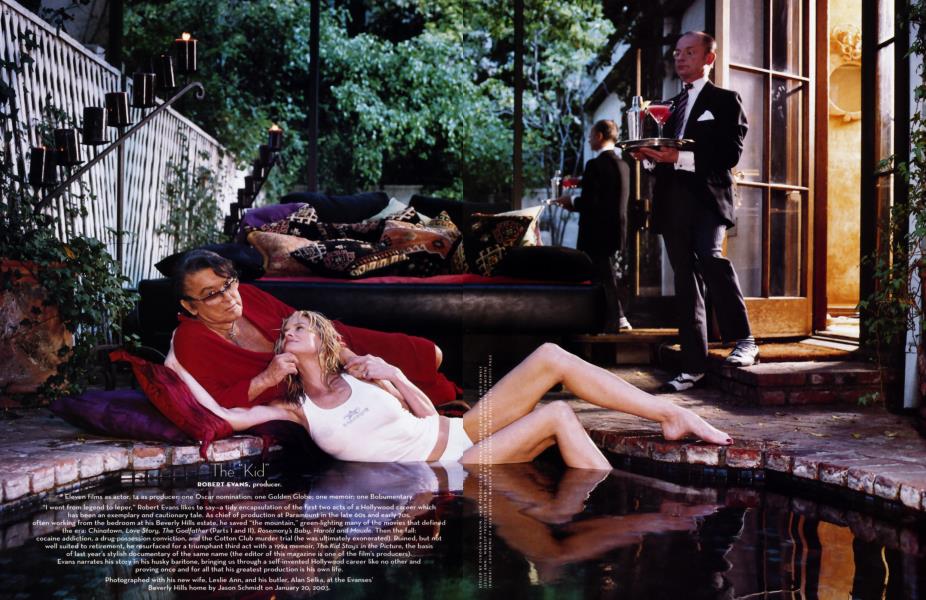
ROBERT EVANS, producer.
Eleven films as actor, 14 as producer; one Oscar nomination; one Golden Globe; one memoir; one Bobumentary.
“I went from legend to leper,” Robert Evans likes to say—a tidy encapsulation of the first two acts of a Hollywood career which has been an exemplary and cautionary tale. As chief of production at Paramount in the late 60s and early 70s, often working from the bedroom at his Beverly Hills estate, he saved “the mountain,” green-lighting many of the movies that defined the era: Chinatown, Love Story, The Godfather (Parts I and II), Rosemary’s Baby, Harold and Maude. Then the fall: cocaine addiction, a drug-possession conviction, and the Cotton Club murder trial (he was ultimately exonerated). Ruined, but not well suited to retirement, he resurfaced for a triumphant third act with a 1994 memoir, The Kid Stays in the Picture, the basis of last year’s stylish documentary of the same name (the editor of this magazine is one of the film’s producers). Evans narrates his story in his husky baritone, bringing us through a self-invented Hollywood career like no other and proving once and for all that his greatest production is his own life.
Photographed with his new wife, Leslie Ann, and his butler, Alan Selka, at the Evanses’ Beverly Hills home by Jason Schmidt on January 20, 2003.
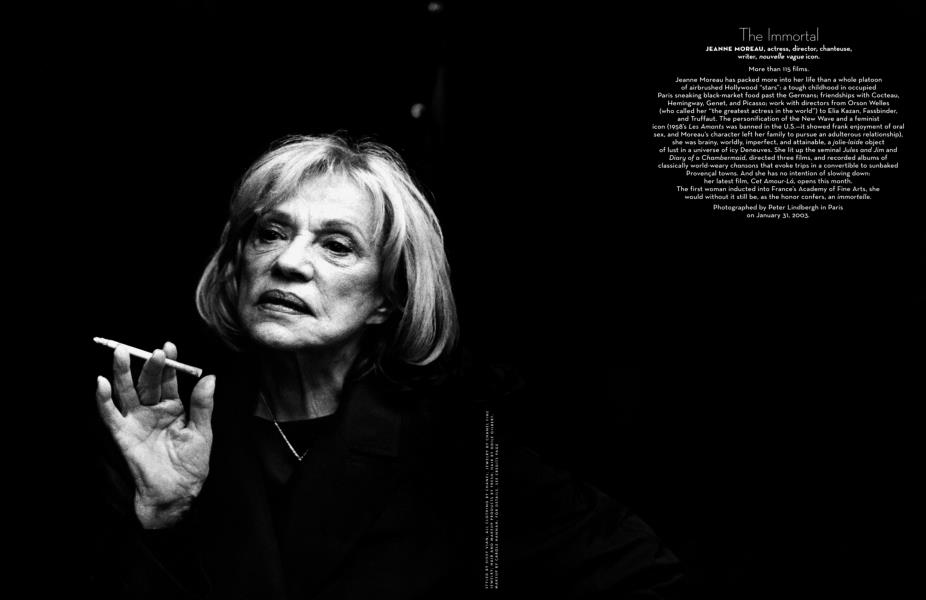
JEANNE MOREAU, actress, director, chanteuse, writer, nouvelle vague icon.
More than 115 films.
Jeanne Moreau has packed more into her life than a whole platoon of airbrushed Hollywood “stars”: a tough childhood in occupied Paris sneaking black-market food past the Germans; friendships with Cocteau, Hemingway, Genet, and Picasso; work with directors from Orson Welles (who called her “the greatest actress in the world”) to Elia Kazan, Fassbinder, and Truffaut. The personification of the New Wave and a feminist icon (1958’s Les Amants was banned in the U.S.—it showed frank enjoyment of oral sex, and Moreau’s character left her family to pursue an adulterous relationship), she was brainy, worldly, imperfect, and attainable, a jolie-laide object of lust in a universe of icy Deneuves. She lit up the seminal Jules and Jim and Diary of a Chambermaid, directed three films, and recorded albums of classically world-weary chansons that evoke trips in a convertible to sunbaked Provencal towns. And she has no intention of slowing down; her latest film, Cet Amour-Là, opens this month. The first woman inducted into France’s Academy of Fine Arts, she would without it still be, as the honor confers, an immortelle.
Photographed by Peter Lindbergh in Paris on January 31, 2003.
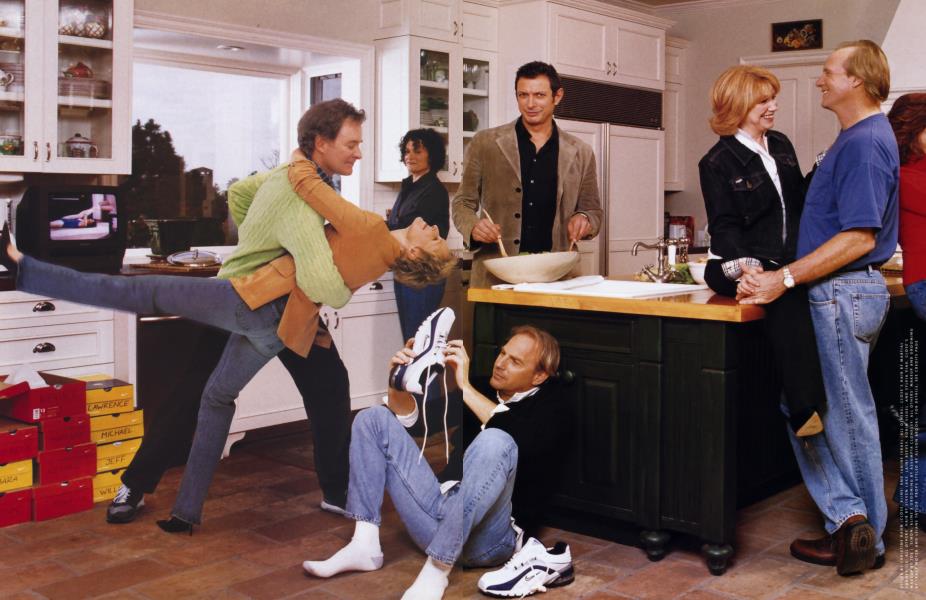
THE REUNITED CAST OF THE BIG CHILL
Meg Tilly (on TV), Kevin Kline. Glenn Close, co-writer Barbara Benedek, Kevin Costner, Jeff Goldblum, Mary Kay Place, William Hurt. JoBeth Williams. Tom Berenger, producer Michael Shamberg, and director Lawrence Kasdan.
Here it is, the 20-year reunion of the amazing cast that director/co-writer Lawrence Kasdan put together for the greatest reunion movie of them all (including Kevin Costner, whose big scene was left on the cutting-room floor). With its mix of serious social themes, intimate moments, and feel-good 6Os hits (Motown, baby), The Big Chill struck a cultural nerve amid talk of nuclear winters and Reaganomics in 1983. People loved it. People hated it. They said it was phony. They said it was all too painful. Just like the 80s themselves. At a time when the word "yuppie" was just entering the lexicon, the actors stood in for everyone who had given up their old Utopian dreams. Because The Big Chill raised so many issues that haven't entirely left us. it seems as if it has never really gone away. As for the cast, they look like they could still play a mean game of touch football. Here's wagering they would kick the St. Elmo's Fire ensemble's ass.
Photographed by Jason Schmidt in Pacific Palisades, California, on January 8, 2003.
Subscribers have complete access to the archive.
Sign In Not a Subscriber?Join Now


